
Situatie
Event professionals are no strangers to operational pressure. Between managing repetitive manual tasks, proving measurable ROI, and delivering ever-more memorable attendee experiences, the demands are relentless. Amid these challenges, Artificial Intelligence (AI) has emerged as a transformative force, promising not just efficiency, but strategic reinvention.
Yet, the strategic impact of AI extends far beyond automation or chatbot convenience. When implemented thoughtfully, AI unlocks deep personalization, data-driven decision-making, and new dimensions of business intelligence. This isn’t just about doing things faster, it’s about doing them smarter.
Solutie
1. AI empowers people to do more, not less
One of the most persistent myths about AI is that it will make professionals obsolete. The truth is far more empowering. AI enhances human potential rather than replacing it. It automates repetitive work, freeing teams to focus on creativity, strategy, and meaningful engagement.
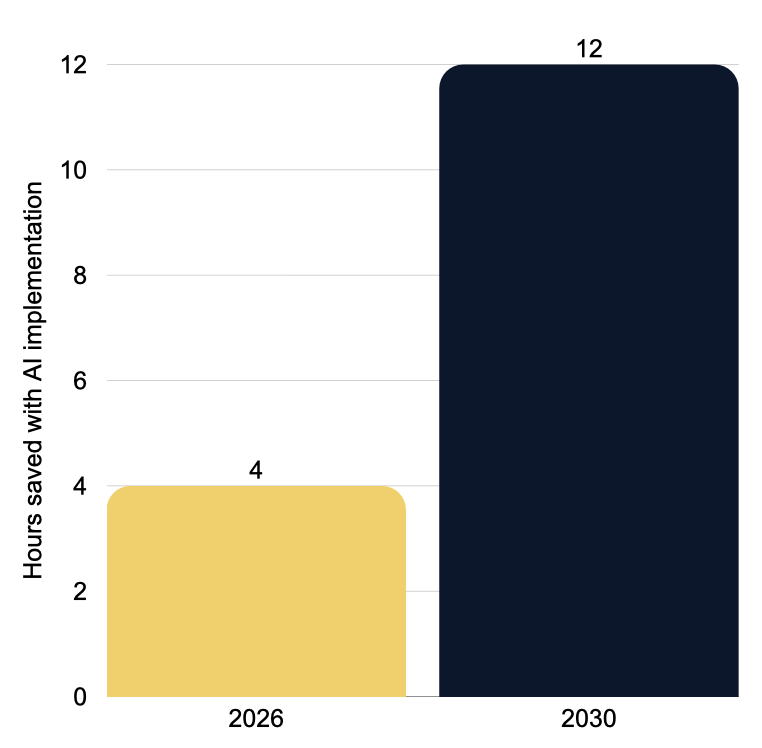
Empirical data supports this shift. A Thomson Reuters study found that professionals expect AI to save an average of 4 hours per week within the next year, and up to 12 hours per week within five years. That’s the equivalent of adding one extra team member for every ten people on staff.
In marketing specifically, AI saves professionals an average of 13 hours per week, enabling reinvestment of time in high-value initiatives such as storytelling, campaign innovation, and partnership building.
In essence, AI acts as an exceptional co-strategist, analyzing patterns, identifying insights, and optimizing workflows. But it still requires human leadership. Emotional intelligence, intuition, and the ability to read the subtle energy of an audience remain irreplaceable.
2. AI delivers ROI that’s measurable
Many event organizers view AI as a cost center or a futuristic nice-to-have. In reality, its impact is both quantifiable and substantial. Unlike many technology investments, AI’s financial contribution to event performance can be tracked, measured, and defended in boardroom discussions.
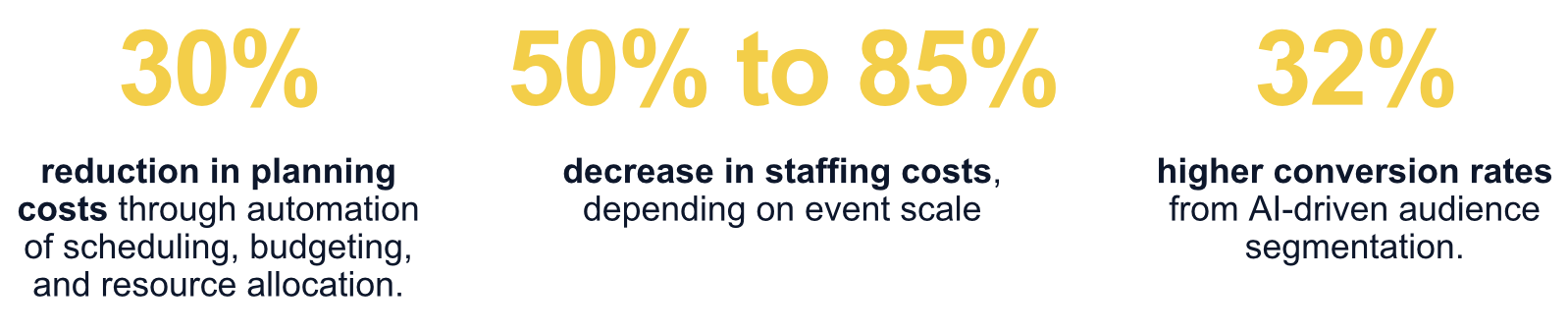
These figures underscore a clear truth: AI is not just an operational tool, it’s a financial engine. With 77% of professionals expecting AI to have a “significant or transformational” impact on their work within five years (Thomson Reuters), the question is no longer whether to invest, but how strategically to deploy it.
3. Personalization is no longer about first names in emails
Event marketing personalization has evolved far beyond “Hello, [Name].” AI enables hyper-personalization, tailoring every aspect of the attendee journey to individual behaviors, interests, and professional goals.
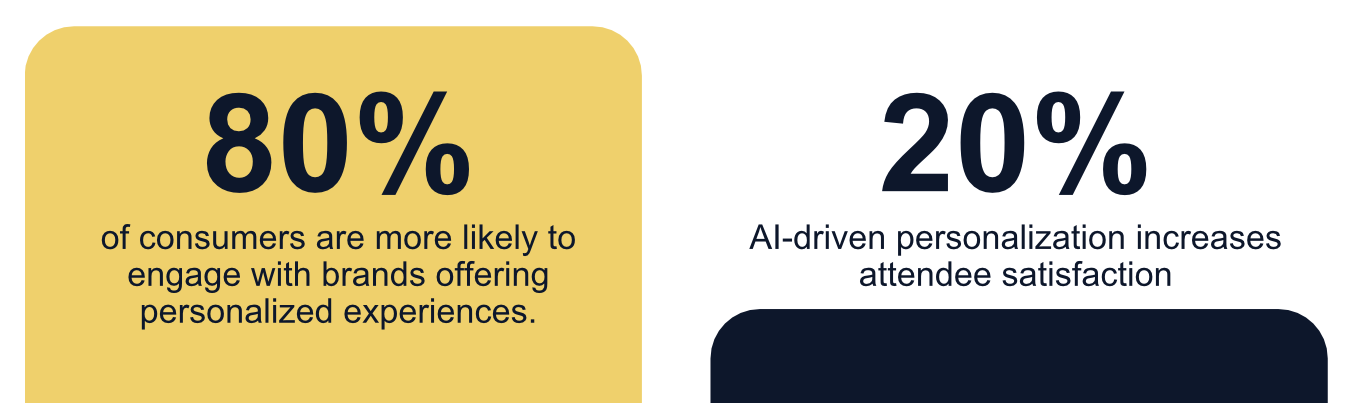
This form of personalization goes beyond demographics. AI analyzes behavioral patterns and intent signals to craft recommendations that resonate deeply with each participant.
A compelling case study comes from LendIt Fintech, where an AI-powered matchmaking engine facilitated over 22,000 one-on-one meetings, achieving an impressive 31% acceptance rate. By curating meaningful connections and customized agendas, AI transformed networking from serendipity into strategy.
4. AI solves problems you didn’t know you had
I’s value in events extends far beyond marketing automation. Its ability to uncover and solve latent operational challenges makes it one of the most versatile technologies in the industry.
Two examples:

These innovations demonstrate AI’s ability to tackle strategic challenges, turning what once seemed operationally complex into opportunities for differentiation and trust-building.
5. The real value lies after the event
A successful event doesn’t end when attendees leave. Its long-term value lies in the insights and connections it generates and AI is key to unlocking that enduring intelligence.
Consider this: on average, attendees retain less than 10% of conference content. Without intervention, most of a conference’s intellectual value evaporates within days. AI changes that equation.
By transcribing, summarizing, and analyzing hours of video and audio, AI transforms transient presentations into actionable intelligence. Organizations that use AI-generated professional summaries achieve three times higher implementation rates compared to those relying on manual notes.
Risk, governance and adoption
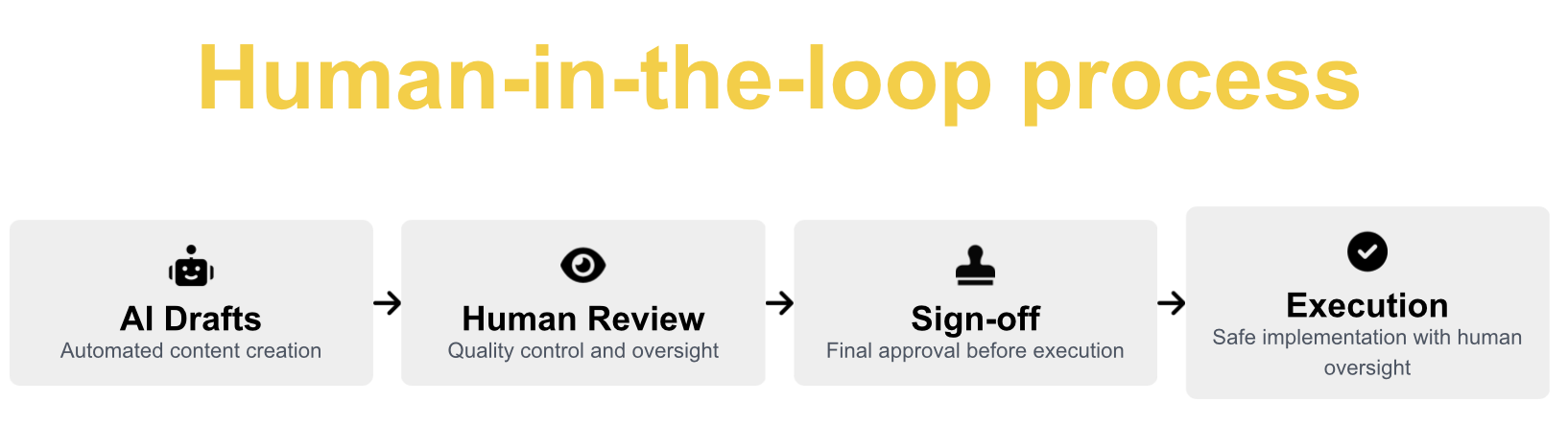
Speed without guardrails invites error: poor matches, tone-deaf messaging or inappropriate data sharing. Mitigate risk with a staged “human-in-the-loop” posture: AI drafts and pre-fills; humans review and sign off. Complement this with clear consent and data-retention policies, outcome instrumentation (open rates, session lift, sponsor meeting conversions) and modest training. Pilots that include manager endorsement and short training cycles see faster adoption and higher worker comfort.
By consolidating multiple event tools and leveraging contextual AI, teams can save up to 200 hours per year per person, turning repetitive tasks into automated workflows and freeing capacity for creativity, strategy, and high-impact initiatives. Book a demo with Enjoee today (www.enjoee.it) and discover how your team can transform these reclaimed hours into smoother operations, richer attendee experiences, and stronger sponsor engagement, making every event not just more efficient, but strategically impactful.
Leave A Comment?