
Soluții

Wi-Fi 7: What is it, and do you even need it?

Wi-Fi 7 is a specification for Wi-Fi devices that officially debuted in January 2024, and it builds on the previous official specification Wi-Fi 6E. It’s based on the draft 802.11be standard, published in May 2021.

The most show-stopping feature of Wi-Fi 7 is that it might make wired Ethernet connections obsolete for a certain class of both home users and professionals—the first live demonstration of the standard in early 2022 showcased some mind-blowing speeds.

Wi-Fi 7 can theoretically support bandwidth up to 46 gigabits per second (Gbps) per access point, which is just shy of five times as fast as the maximum 9.6 Gbps speed of Wi-Fi 6 (also known as 802.11ax). The draft authors call this “Extremely High Throughput,” or EHT.
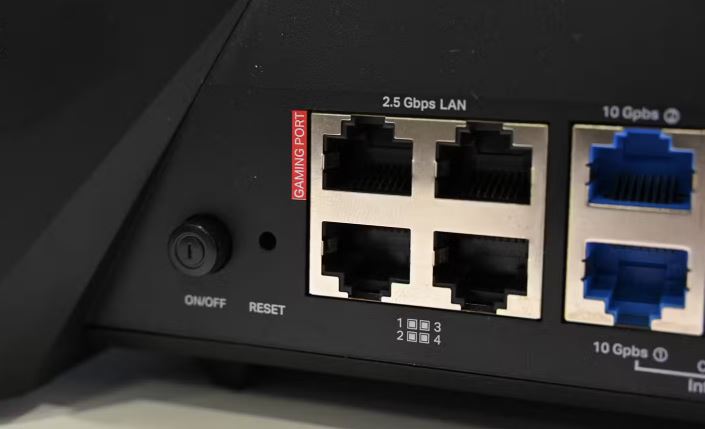
Currently, commonly-available wired Ethernet technology maxes out at 10 Gbps (10GBASE-T), although it’s basically non-existent in consumer devices at the moment. And although higher speeds (such as Terabit Ethernet) exist in specialist settings like data centers, its arrival in the home or small business setting—if it ever happens—is likely far off.

So for current users of both Gigabit and 10 Gigabit Ethernet, Wi-Fi 7 might be able to replace the need for wired connections under optimal conditions—though purists and power users will likely continue to use hard-wired connections for the foreseeable future.

Aside from the theoretical potential of blazingly fast speeds of Wi-Fi 7, the Wi-Fi Alliance plans to include other notable improvements in the Wi-Fi standard.

Full Utilization of the 6 GHz Band

Full utilization of the new “6 GHz Band” (actually 5.925–7.125 GHz), was first supported in Wi-Fi 6E. The 6GHz band is currently only occupied by Wi-Fi applications (although that might change), and using it results in dramatically less interference than the 2.4 GHz or 5 GHz bands.

Even Lower Latency

The Wi-Fi 7 spec aims at “lower lateness and higher reliabilities” for time-sensitive networking (TSN), which is essential for cloud computing (and cloud gaming). It’s also a critical requirement for replacing wired Ethernet connections.

While Wi-Fi 6 already offers significant improvements over Wi-Fi 5 in the latency department, the goal of Wi-Fi 7 is to provide consistent single-digit millisecond latency for all devices across the entire network—and not just for the devices in the optimal coverage area.

Wi-Fi 7 offers Multi-Link Operation (MLO) with load balancing and aggregation that combines multiple channels on different frequencies to deliver better performance.

This means a Wi-Fi 7 router can utilize all bands and channels available dynamically to speed up connections or avoid bands with high interference. This improvement, along with the others listed here, is how Wi-Fi 7 can hit a theoretical maximum throughput three times higher than Wi-Fi 6.

Upgrades to 802.11ax

According to its specifications, Wi-Fi 7 offers direct enhancements of Wi-Fi 6 technologies, such as 320 MHz channel width (up from 160 MHz in Wi-Fi 6), which allows faster connections, and 4096 quadrature amplitude modulation (QAM) technology that allows more data crammed into each hertz.

Is it Significantly Better than Wi-Fi 6 and 6E?

On paper and in laboratory tests with compatible gear, yes, Wi-Fi 7 is significantly better than previous Wi-Fi standards.

However, like with all previous Wi-Fi generations, you won’t see the full benefit of Wi-Fi 7 until you pair it with Wi-Fi 7 hardware. That said, the Wi-Fi 6 optimizations we mentioned in the previous section will help Wi-Fi 7 routers provide an even better experience to Wi-Fi 6 devices on your network.

Given the number of facts and figures you have to take in to compare Wi-Fi generations to each other (as well as the seemingly limitless number of routers out there) it’s easy to get confused about security standards.

The Wi-Fi standard is separate from the security standard, Wireless Protected Acess (WPA) used by modern Wi-Fi hardware. Wi-Fi 5 supports WPA2, Wi-Fi 6 and 6E support WPA3, and Wi-Fi 7 ships with WPA3 support. (In theory, a WPA4 is on the distant horizon but as of now you’ll find little more than a passing reference in the form of “WPA4 (TBD)” sprinkled here or there in technical documents.)

In short, when you purchase a new Wi-Fi 7 router it will have the most current Wi-Fi security available and will be as secure (or more secure) than your current router depending on the age of the replaced router model.

If you’re rocking an ancient Wi-Fi router, especially one struggling to meet your household’s growing demands, you’d likely be well served to snap up a Wi-Fi 7 router.

If you recently bought a nice Wi-Fi 6 or Wi-Fi 6E router, however, there’s no rush. While there are clear benefits to the Wi-Fi 7 standard even if you’re a cutting-edge sort of user that adopts new technology as soon as it comes out, it’ll be a while until you see tangible benefits from switching your home over to Wi-Fi 7 if you’re already on Wi-Fi 6 or better. Chasing performance benchmarks is fun, but in real-world applications, you only need so much bandwidth to watch YouTube videos on your phone or sit on a Zoom call at work.

So if you have a dusty old mid-tier router you bought off the shelf at Best Buy five or more years ago, consider upgrading. But if you’re already rocking a current and premium setup, feel free to sit it out for a spell and wait for the Wi-Fi 7 prices to drop (and more end devices to support it).

[mai mult...]
Optoma ZU860 – review

The Optoma ZU860 is a professional-grade laser projector designed for large venues, offering high brightness, versatile installation options, and advanced features that cater to a wide range of applications, including corporate, education, and entertainment settings. Below is a detailed review of its key features, specifications, and performance.

  1. Brightness and Image Quality:
    • The ZU860 boasts a powerful 8,500 ANSI lumens of brightness, making it ideal for large venues and environments with high ambient light. This level of brightness ensures clear and vibrant images even in challenging lighting conditions.
    • It supports WUXGA resolution (1920 x 1200 pixels), delivering sharp, detailed images suitable for presentations, videos, and digital signage.
    • The projector offers a high contrast ratio of 2,000,000:1, enhancing image depth and detail with deeper blacks and more vibrant colors.
  2. Laser Light Source:
    • The ZU860 utilizes a laser phosphor light source, providing up to 30,000 hours of virtually maintenance-free operation. This significantly reduces the total cost of ownership and minimizes downtime due to lamp replacements.
    • The laser technology ensures consistent brightness and color accuracy over the projector’s lifespan, delivering reliable performance for long-term use.
  3. Installation Flexibility:
    • The projector features a motorized lens with a wide lens shift range (horizontal ±30%, vertical ±20%), allowing for easy and flexible installation without the need to physically move the projector.
    • It supports interchangeable lenses, offering six different lens options to suit various projection distances and screen sizes. This adaptability makes it suitable for a wide range of venue sizes and layouts.
    • The projector includes keystone correction and geometric correction capabilities, enabling precise image alignment even on irregular surfaces.
  4. Color Accuracy and Performance:
    • Optoma’s DuraCore technology and advanced color processing ensure accurate color reproduction, delivering true-to-life images that are essential for professional presentations and digital signage.
    • The ZU860 supports HDR10, enhancing image detail and contrast for content that benefits from high dynamic range, such as movies and high-definition video.
  5. Connectivity and Control:
    • The ZU860 offers a comprehensive range of connectivity options, including HDMI, HDBaseT, VGA, DVI-D, 3G-SDI, and LAN, ensuring compatibility with a wide variety of devices and AV systems.
    • It supports network control protocols such as Crestron, Extron, PJ-Link, and Telnet, making it easy to integrate into existing control systems for remote monitoring and management.
  6. Integrated Features for Enhanced Usability:
    • The projector includes a built-in edge blending and warping feature, allowing for seamless multi-projector setups and projection onto curved surfaces.
    • It has a dust-sealed optical engine that protects against dirt and dust, ensuring reliable operation in challenging environments.
[mai mult...]

BenQ LU785 – review

The BenQ LU785 is a professional-grade laser projector designed for use in medium to large venues. It offers a range of features that cater to business presentations, educational environments, and other professional applications. Below is a detailed review of its key features, specifications, and performance.

  1. Brightness and Image Quality:
    • The LU785 provides 6,000 ANSI lumens of brightness, making it suitable for well-lit rooms and venues where ambient light might be a concern.
    • It features a WUXGA resolution (1920 x 1200 pixels), delivering crisp and clear images that are ideal for detailed presentations, text, and video content.
    • The projector’s high contrast ratio of 3,000,000:1 enhances image clarity, with deep blacks and vibrant colors, providing excellent visual performance.
  2. Laser Light Source:
    • The LU785 uses a laser light source, which offers a lifespan of up to 20,000 hours. This translates to lower maintenance costs and less frequent lamp replacements compared to traditional lamp-based projectors.
    • The laser technology ensures consistent brightness and color performance over time, reducing the need for periodic calibration.
  3. Installation Flexibility:
    • The projector includes a 1.65x zoom lens, providing flexibility in installation distance and making it easier to fit into existing setups without needing extensive adjustments.
    • It supports horizontal and vertical lens shift, allowing for easy alignment of the projected image to fit the screen perfectly without physical adjustments.
    • The projector also features keystone correction and corner fit for precise image alignment in various installation scenarios.
  4. Color Accuracy and Performance:
    • BenQ’s exclusive BlueCore laser technology and the 3LCD system ensure accurate color reproduction and eliminate color wheel artifacts, such as the rainbow effect seen in some DLP projectors.
    • It supports a wide color gamut, enhancing the realism and vibrancy of displayed content.
  5. Connectivity:
    • The LU785 offers extensive connectivity options, including dual HDMI ports, VGA, LAN, and HDBaseT. This makes it easy to connect to a variety of devices, from laptops to video conferencing systems.
    • The HDBaseT support allows for the transmission of video, audio, and control signals over long distances using a single cable, simplifying installation.
  6. Integrated Features for Enhanced Usability:
    • It includes an integrated media player that can play files directly from a USB drive, eliminating the need for a connected PC.
    • The projector supports network control and management via LAN, which is useful for IT managers overseeing multiple devices in an enterprise environment.
    • It features a sealed optical engine that protects against dust and ensures reliable operation in challenging environments.
[mai mult...]

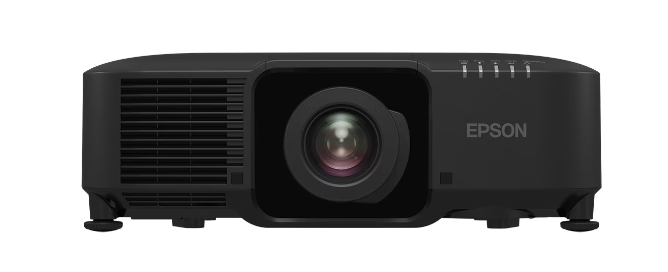
Epson EB-PU2010B – Review

The Epson EB-PU2010B is a high-performance laser projector designed for large venues, offering robust features tailored for professional settings. Below is a detailed review of its key features, specifications, and performance.

  1. Brightness and Image Quality:
    • The EB-PU2010B boasts an impressive brightness of 10,000 lumens, making it ideal for well-lit environments and large venues such as auditoriums, conference halls, and event spaces.
    • It utilizes a WUXGA resolution (1920 x 1200 pixels), providing sharp and detailed images. This resolution is particularly useful for presentations, videos, and detailed graphics.
  2. Laser Light Source:
    • The projector features a laser light source that offers several advantages over traditional lamp-based projectors, including longer lifespan (up to 20,000 hours of maintenance-free operation), consistent brightness, and lower total cost of ownership due to reduced maintenance needs.
  3. Color Accuracy and Image Enhancement:
    • Epson’s 3LCD technology ensures vibrant and accurate color reproduction, providing a wide color gamut and eliminating the rainbow effect seen in some DLP projectors.
    • The projector includes advanced image enhancement features such as detail enhancement and frame interpolation, which improve image clarity and motion smoothness.
  4. Versatile Installation Options:
    • The EB-PU2010B supports a variety of installation scenarios, thanks to its motorized lens with extensive lens shift capabilities and compatibility with a range of optional lenses. This flexibility allows for easy installation in different types of venues and applications.
    • The projector also features geometric correction and edge blending functions, allowing users to project onto curved or irregular surfaces seamlessly.
  5. Connectivity:
    • It includes a comprehensive range of connectivity options such as HDMI, HDBaseT, 3G-SDI, DVI-D, and network connections, ensuring compatibility with a wide array of devices and integration into various AV setups.
    • Wireless connectivity is also supported, enabling easy content sharing and presentation control without cables.
  6. Built-in Features for Easy Operation:
    • The EB-PU2010B is equipped with features that simplify setup and operation, including a built-in media player that allows for content playback without a PC and a split-screen feature that can display multiple sources simultaneously.
[mai mult...]