
3 free Windows tools that help me fix tough PC problems

Configurare noua (How To)

Situatie

If something breaks on a Windows PC in my family or circle of friends, I am usually the one who gets the call. Over the years I have become the default tech support guy, and that means I spend a lot of time hunting down strange errors, slowdowns, and the kind of odd behavior that rarely shows up in Microsoft’s help docs. I have written before about the tools I rely on to fix Windows, including a few standouts from the Sysinternals Suite that have saved me more times than I can count.

Those earlier picks only scratched the surface. Sysinternals is a comprehensive collection of diagnostic utilities created for people who want real visibility into what Windows is doing behind the scenes. If you know where to look, these tools can reveal the root cause of problems that would otherwise stay hidden. I have already talked about Process Explorer, Autoruns, and ProcMon, but there are several more utilities in this suite that help me get to the bottom of stubborn Windows issues. The three below are the ones I keep coming back to whenever I need answers.

Solutie

Using PsExec when a Windows PC will not cooperate
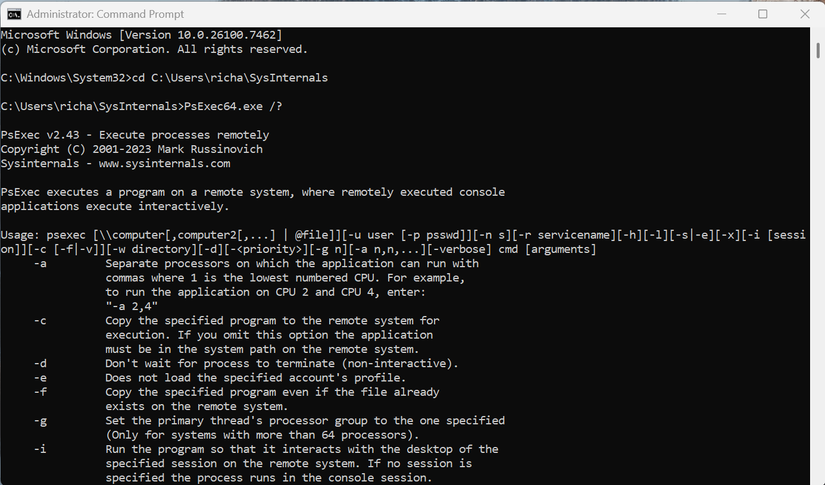
A screenshot of the Windows command line, with SysInternals PsExec open to the help page.

PsExec is one of the most powerful tools in the Sysinternals Suite, and it has saved me more than once when a Windows PC refused to cooperate. It lets you run commands, scripts, and even full command prompts on another computer without installing anything on that machine. When a friend or relative calls me because their computer will not open an app, restart a service, or respond to basic inputs, PsExec often gives me a way in. I can check logs, restart processes, or make system changes even when the desktop is frozen or remote access tools are not working.

Windows has built-in options like PowerShell Remoting and Remote Desktop, but those depend on services that must be set up in advance. PsExec does not need any of that. If you have the right permissions and the PC is reachable on the network, you can get in and start fixing things. I have used it to help machines that would not load a normal desktop, clear out broken services, and run commands that Windows refused to execute locally. Most casual users have never heard of PsExec, but if you help others fix their PCs, it can be the difference between guessing at a problem and actually solving it.

PsExec will not open a window if you double-click it. It is a command-line tool, so you need to run it from an administrator Command Prompt or PowerShell session.

Why I rely on TCPView to troubleshoot and fix Windows networking issues
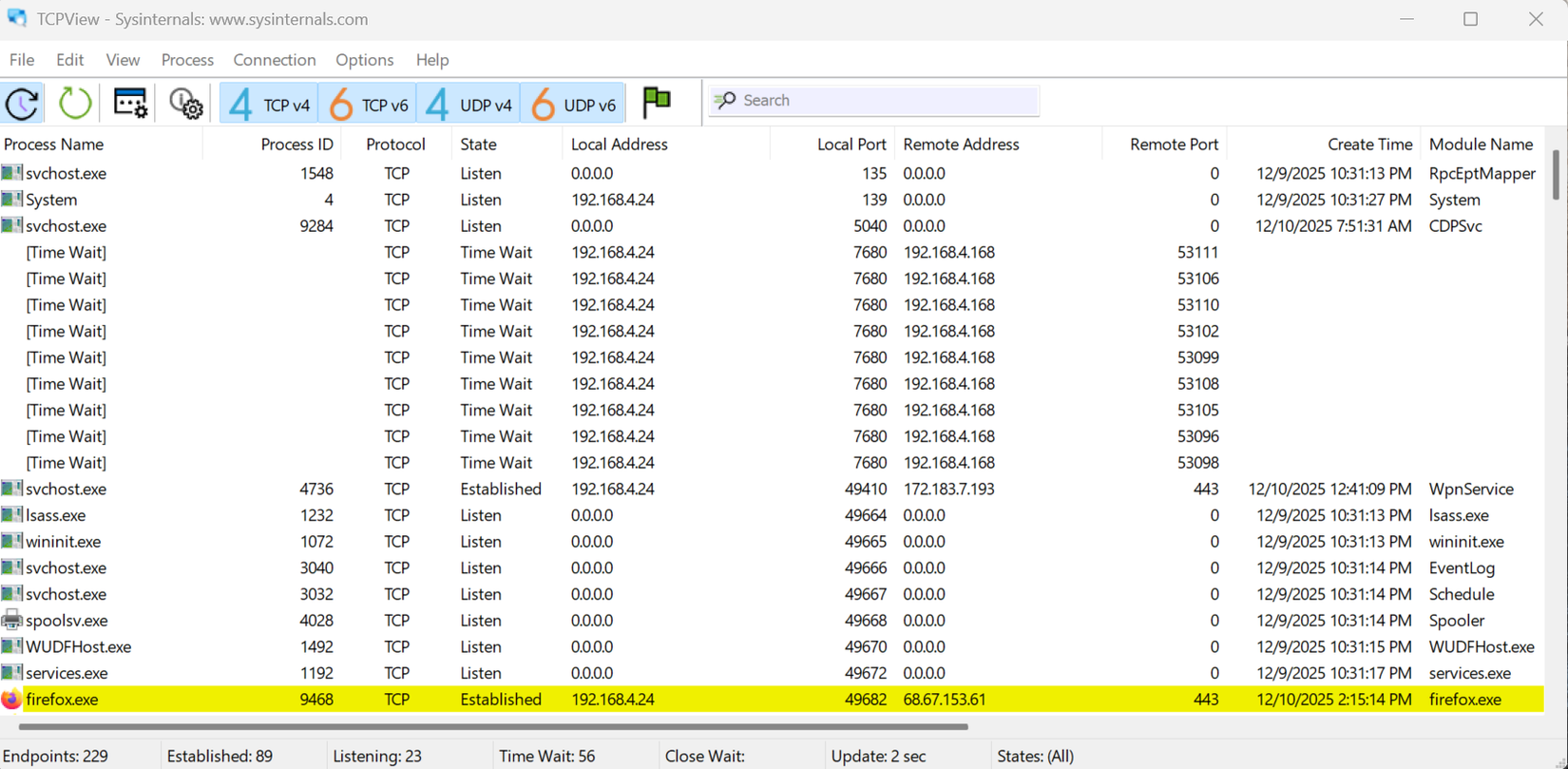
A screenshot of the SysInternals TCPView tool running on a Windows computer.

TCPView is one of those Sysinternals tools that looks simple at first glance but turns out to be incredibly useful once you understand what it shows you. It gives you a real-time view of every network connection on your PC, including which apps are talking to the internet, what ports they are using, and where those connections are going. When I am trying to figure out why an app is hanging, why something keeps phoning home, or whether a strange background process is doing something it should not, TCPView is one of the first things I open.

Windows has built-in tools like Resource Monitor and the old netstat command, but they either hide too much or overwhelm you with raw data. TCPView sits in the Goldilocks’ zone. It updates live, highlights new connections as they happen, and makes it easy to spot anything that looks suspicious or unexpected. I have used it to track down unruly apps, troubleshoot firewall rules, and confirm whether a PC is actually communicating with a server the way it should. If you have ever wondered why something on your system is trying to reach the internet, TCPView gives you the clarity that Windows itself never quite manages to provide.

What RAMMap reveals about Windows memory that Task Manager misses
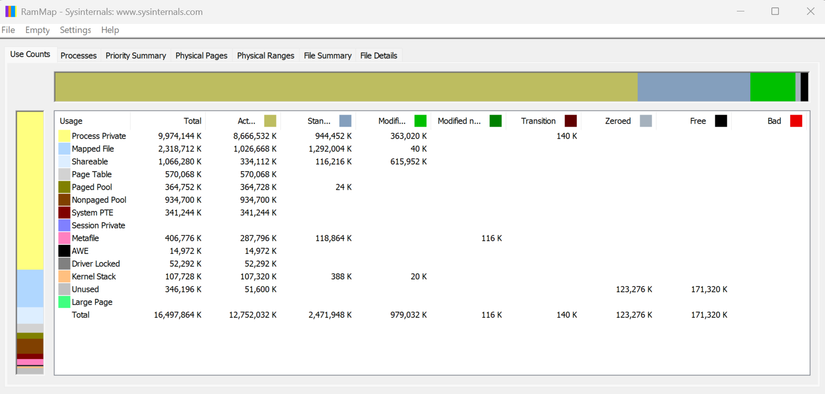
A screenshot of the SysInternals tool RAMMap64 opened on a Windows machine.

RAMMap helps me understand how Windows is actually using my system memory. While Task Manager gives you a high-level overview, RAMMap goes much deeper. It breaks down memory usage into categories like file cache, drivers, mapped files, kernel allocations, and standby lists. When a PC feels slow for no obvious reason or the RAM usage looks suspiciously high, RAMMap helps me see exactly where the problem is. I have used it to diagnose memory leaks, figure out why a system starts running low on usable RAM, and track down cases where Windows is hoarding cached data longer than it should.

Windows has built-in tools like Resource Monitor and the performance tab in Task Manager, but they only scratch the surface. They show you what is happening right now, not what has been building up over time or which components are quietly consuming memory in the background. RAMMap gives me a full snapshot of memory usage and lets me compare it against what I expect from a healthy system. If a process is leaking RAM, if a driver is misbehaving, or if the standby list needs to be cleared, RAMMap makes it obvious.

Tip solutie

Permanent

Voteaza

(2 din 3 persoane apreciaza acest articol)

Despre Autor

Leave A Comment?