
How to Zoom the Linux Terminal

The default font size in the Linux terminal can seem small. If you have eye problems like me, you need to focus hard to read the text. Worry not because there are some tricks that let you zoom the Linux terminal so that you can see and read everything without any hardship.Even without eye problems, this zooming trick is useful for other cases.

For example, if you’re presenting to a large audience in a room, people in the back will find it difficult to see what you’re doing on the terminal. Zooming it to an appropriate size solves that problem.

[mai mult...]
How to prevent a Bash Script from relaunching too soon

Sometimes it’s useful to make sure a Bash shell script doesn’t run too frequently. Here’s a neat way to set a time limit that must expire before the script can run again.

Depending on what it’s doing and which other processes it may launch, a Bash script can consume as much RAM and CPU time as any other resource-hungry process. It can be useful to limit how frequently such a script can be launched.Enforcing a period of respite between each run of a heavyweight script stops it from hogging resources. Computationally expensive scripts can monopolize computers to the point where other users experience a drop in performance.

In extreme cases, if the script causes a lot of disk churn, for example, it can even hasten the demise of your hardware.Of course, engineering a scheme that limits how soon you can relaunch a script adds code to your script, and gives it one more thing to do. That might sound counterproductive, but if the checks are lightweight and fast, their tiny overheads are far outweighed by their resource savings.

[mai mult...]

How to use Robocopy to Sync Files on a Drive or Directory in Windows

The robocopy (robust file and folder copy) is a command line tool available in Windows that copies files from one place to another. It can copy between directories on the same drive, or between devices like USB sticks and portable disks, and to network locations.

When to Use the Robocopy Command

The robocopy command is perfect for automating your workflows. If you regularly have to copy files between the same locations, you can set up a script to do it all for you rather than having to perform the task manually.It’s particularly useful for performing backup tasks, with the added advantage that you won’t have to remember to perform the backup, improving the reliability of your backup practices. You can use robocopy to regularly back up your files to an external drive, or to cloud storage.

[mai mult...]

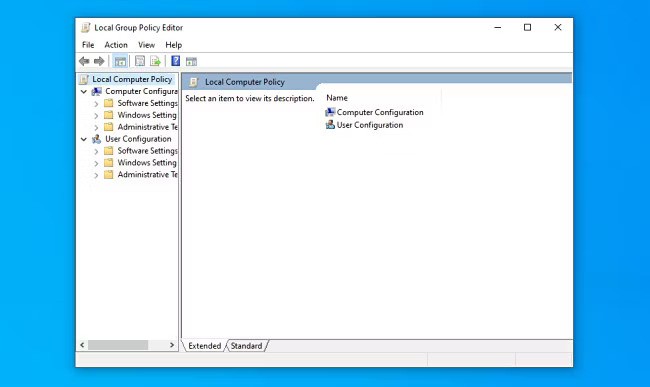
How to open the Group Policy Editor on Windows 11 and Windows 10

If you need to make deep changes to Windows 10 or Windows 11, you sometimes need to open Group Policy Editor, a tool that ships with Windows Pro and Enterprise editions only.

What Is the Group Policy Editor?

Group Policy Editor is a utility that allows you to configure Group Policy settings for a Windows PC or a group of PCs. Aimed mostly at network administrators, Group Policy defines how you or a group of people can use your machines, restricting or allowing features as necessary.

Group Policy Editor is a Microsoft Management Console app with the filename gpedit.msc, and it’s usually located in the “C:\Windows\System32” folder.It’s important to note that Group Policy Editor is not available in Windows 10 or Windows 11 Home. It only ships with Windows 10 or Windows 11 Pro or Enterprise editions.

If you’re not sure which edition of Windows you have, it’s easy to find out. Open Settings, navigate to System > About, and you’ll see it listed under Edition.There are several ways to open Group Policy Editor in Windows 10 and Windows 11, so we’ll cover a handful of major ways to do it below. Each one will get you to the same place, so pick whichever suits you best.

[mai mult...]