
Whether you’ve encountered an issue with Googlebook OS, you’re planning to sell or return your Googlebook, or you just need a fresh start, a factory reset is something you’ll need to know how to do. Fortunately, like with most things on Googlebook OS, a factory reset is simple to do, even if it’s different than factory resetting a Chromebook.
[mai mult...]3 annoying Windows apps you can replace with an Excel spreadsheet
Most productivity software sells you a clean interface and a recurring charge for features you could build yourself in an afternoon. I’ve paid for tools that promised to do a lot, and they ended up being spreadsheets. People write Excel off as old or basic, but it can do math, it saves everything, and it works offline.
[mai mult...]3 Linux commands you’ve overlooked for too long
Linux ships with hundreds of small utilities, and most people stick to a handful. Turns out, there are tons of forgotten commands that can be either slightly fun or extremely useful. Three of them, tac, shuf, and timeout, solve common problems in a single line and take seconds to learn. And they might just earn a spot in your repertoire of commands.
[mai mult...]Your Windows 11 PC is wasting RAM on 5 apps you probably don’t even use
Windows 11 and its native apps don’t have the best reputation. Microsoft has packed the system with all kinds of features, making it feel increasingly bloated. Having to put up with features you don’t want is bad enough, but the real problem starts when apps consume valuable RAM in the background without your knowledge. Some can use hundreds upon hundreds of megabytes. When you add them all up, they can take a considerable chunk of memory away from processes that actually need it. Here are a few such apps you may want to uninstall.
[mai mult...]A better way to use Alt+Tab in Windows 11
I’m one of those people who presses Alt+Tab hundreds of times a day to bounce between the many windows I have open. The problem is that Windows’ built-in switcher starts to get awkward when I have lots of windows open, and aside from choosing how many thumbnails to display, there’s not much room for customization.
Open windows are much easier to see
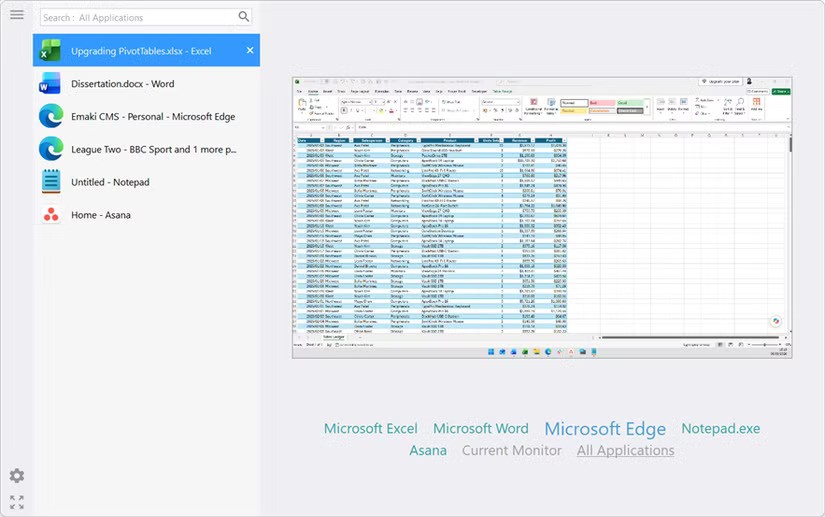
Windows 11’s Alt+Tab switcher is fine when I only have a few windows open. But once I’ve got a bunch of them running, those little thumbnails aren’t always much help. If I’ve got several Edge windows open, for example, I can end up staring at a row of tiny previews trying to work out which one I need. Alt-Tab Terminator takes a different approach. It puts my open windows into a vertical list on the left, with a much larger live preview on the right.
I can move through the list and actually see the contents of the selected window before I switch to it. One of the things I like most about Alt-Tab Terminator is the full-screen button in the bottom-left corner. After clicking it once, the switcher opens full-screen the next time I press Alt+Tab, giving me an even bigger view of everything. The preview also adjusts to fit the window, which is useful when I’m moving between my laptop screen and a larger monitor. And when the list gets long, I can scroll through it and wrap back around to the top when I reach the bottom.
[mai mult...]How to fix Windows Volume Controls with EarTrumpet and access every setting
We’ve come a long way from that simple volume slider in Windows 3.1 and later Windows 95. Back then, there was no guarantee every PC would even have a soundcard in it, so sophisticated sound mixing and volume control were limited to the purview of professional audio workstations. Today, Windows actually has a robust and sophisticated sound management system. The problem is that in an effort to keep the more “complex” stuff out of sight, Microsoft has made anything beyond tweaking the master volume slider hidden behind multiple clicks and menus.
[mai mult...]Windows won’t let you fix these 3 annoyances without PowerShell
Windows 11 is still my go-to operating system, but using it sometimes feels like a constant tug of war between how I want to work and how Microsoft thinks I should work. I like Windows, I know my way around it, and it fits my workflow better than the alternatives. What frustrates me is how often Microsoft gives me plenty of ways to customize the little things while making some of the bigger annoyances much harder to change.
That’s especially strange when you consider how massive the Windows 11 Settings app has become. Most of the operating system can be adjusted from one place, yet there are still a few frustrating defaults that Microsoft doesn’t give you a straightforward switch for. For these three, I had to skip Settings entirely and turn to PowerShell. Fortunately, none of this is especially complicated. In each case, it’s mostly a matter of carefully copying and pasting a command, pressing Enter, and letting Windows do the rest.
[mai mult...]File Converter is the right-click menu upgrade every Windows user should install
Everyone occasionally has problems with unusual file formats. Maybe you’re a Windows and Android user who encounters an HEIC file on the internet, downloads an image expecting a JPG only to get a WebP, or simply needs a PNG converted into a JPG. Whatever the specific case, usually converting an image requires using another program—often Microsoft Paint—or a converter on the web. At best, it is annoying, especially if you have to do it multiple times throughout your work day. If you use an online converter, it could be worse; it could expose sensitive information to a third party. File Converter replaces that entire process with a right-click menu option that converts your files locally. I’ve had it installed on my PC for so long now that it feels like Windows is missing something without it.
[mai mult...]How to remove Ads from Windows 11 Search
Microsoft is acting further on its promise to fix some of Windows 11’s worst annoyances. The company is rolling out changes in the Windows Insider Experimental channel that promise a less cluttered search box that largely eliminates ads, although you’ll need to tweak settings to get the best results. The upgraded search starts with a “calmer” appearance that doesn’t try to stuff trends, trivia, and other less-than-helpful features into its home screen or results. You’ll see highlights for recent searches, clearer organization, and a better sense of where results come from. It’ll be easier to tell if you’re looking at a file or a web result, for instance.
More importantly, Microsoft has stripped “promotional content” (read: ads) from web results, focusing on the most relevant answer instead of promos and products. Windows 11 now prioritizes local results over the web, and a “first round” of ranking improvements will help useful settings show higher in results. Other updates include more forgiving results (mistype “utlook” and you’ll still find Outlook), more accurate file searches, and fewer crashes.
[mai mult...]How to use umbrelOS
The umbrelOS is a server OS for everybody. People who aren’t familiar with the command-line interface can just start their homelab using umbrelOS without any technical knowledge. And for people who already have one, umbrelOS can make an excellent addition to an existing setup. It feels polished and everything just makes sense. The labels on the buttons are easy to understand.
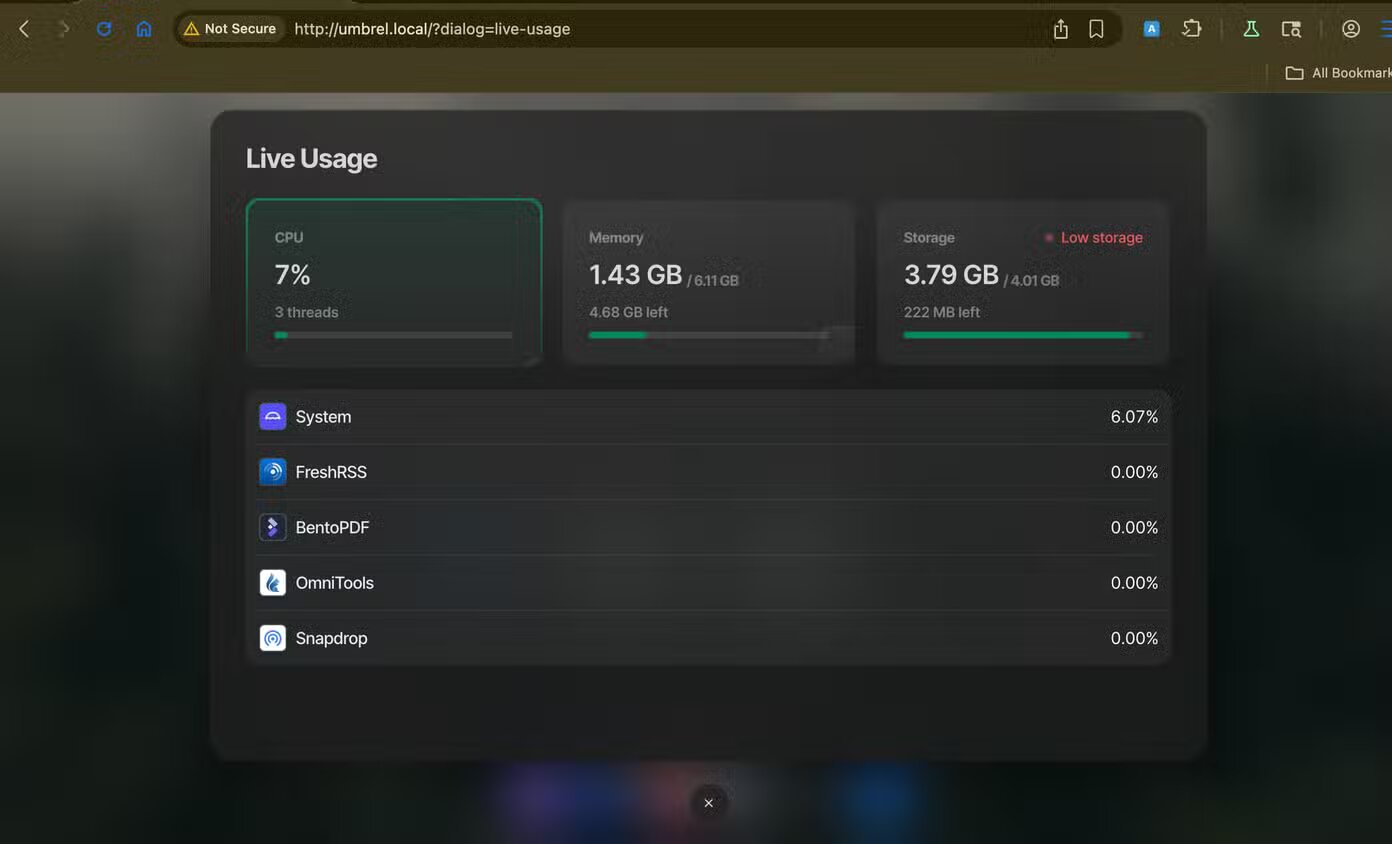
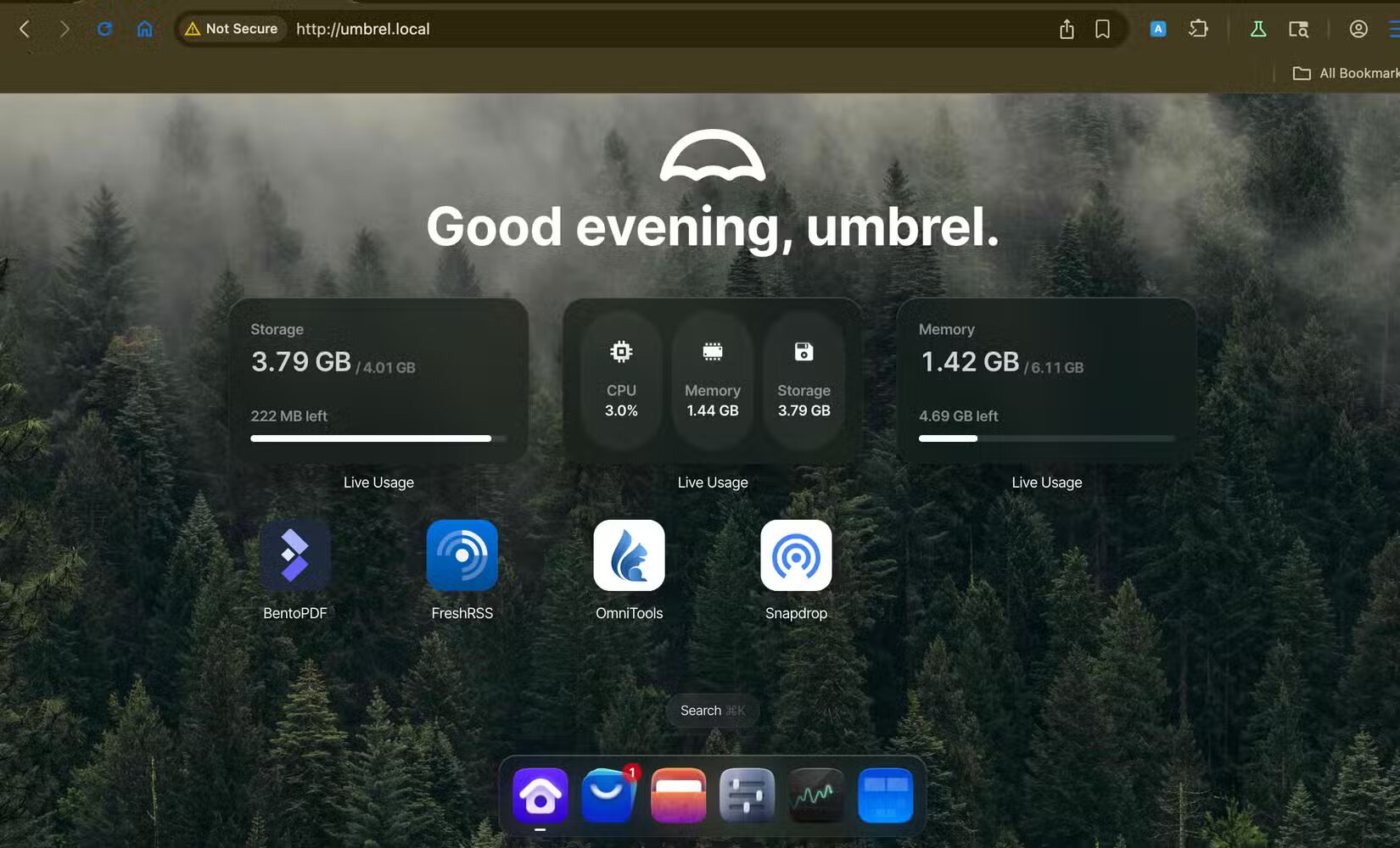
On the dashboard, you have a desktop-like home. Front and center we have the live resource usage stats. Below it, there is a dock.
Upload or browse your files
This file manager looks and feels a lot like the Finder on macOS with tabs for applications, documents, downloads, recents, photos, and videos. Here you can browse files that you’ve already uploaded to umbrelOS.
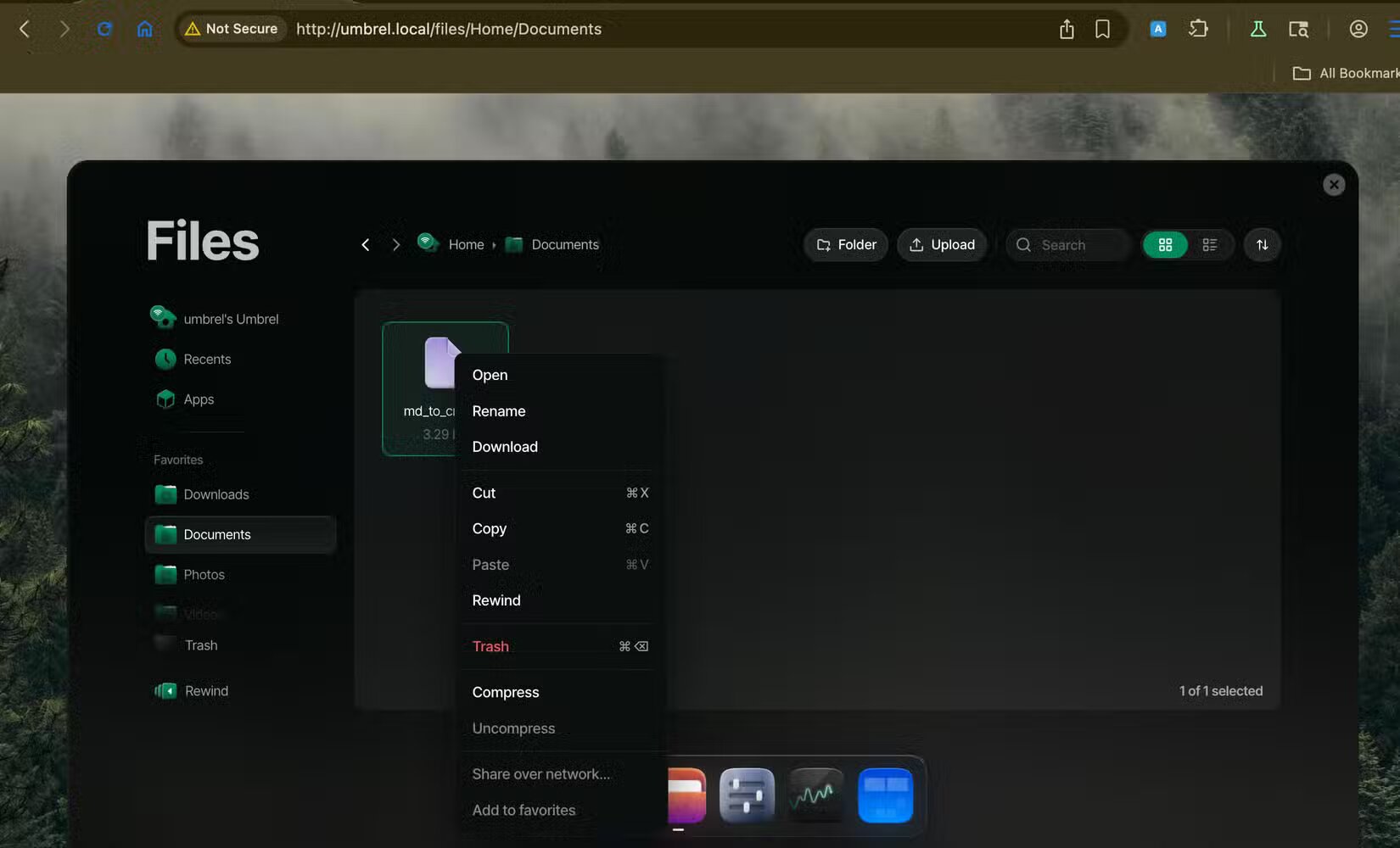
Copying, pasting, creating new files or folders, compress/uncompress work just like on desktop file managers.
Install self-hostable apps with one click
To download and run apps on your home server operating system, you typically use command-line package managers or Docker commands to host them as services on your phone.
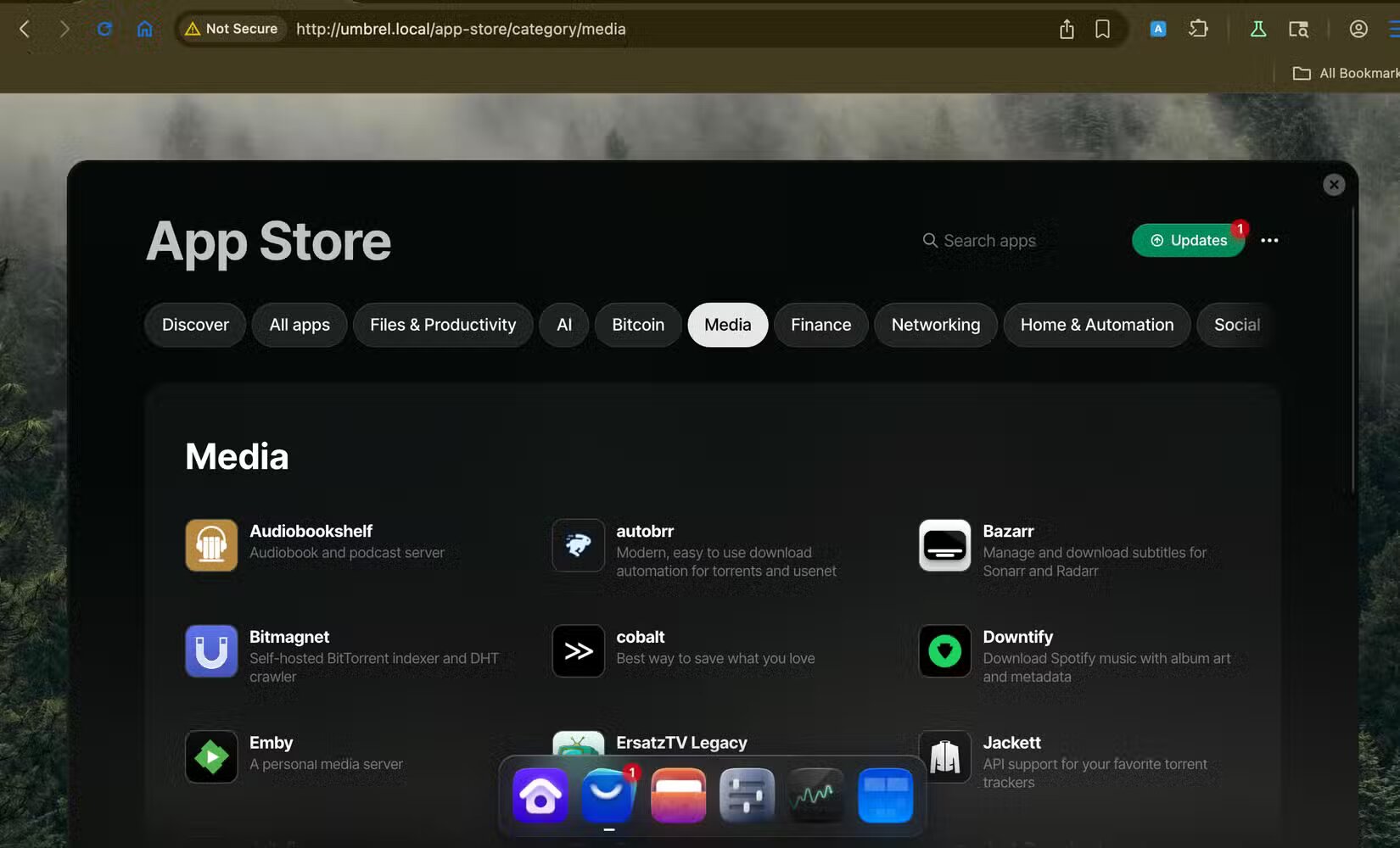
The umbrelOS takes away all that complexity and gives you a simple app store where you can install any of the hundreds of self-hostable apps with a single click. Most apps that most people need are already here, so this store should suffice for most people.
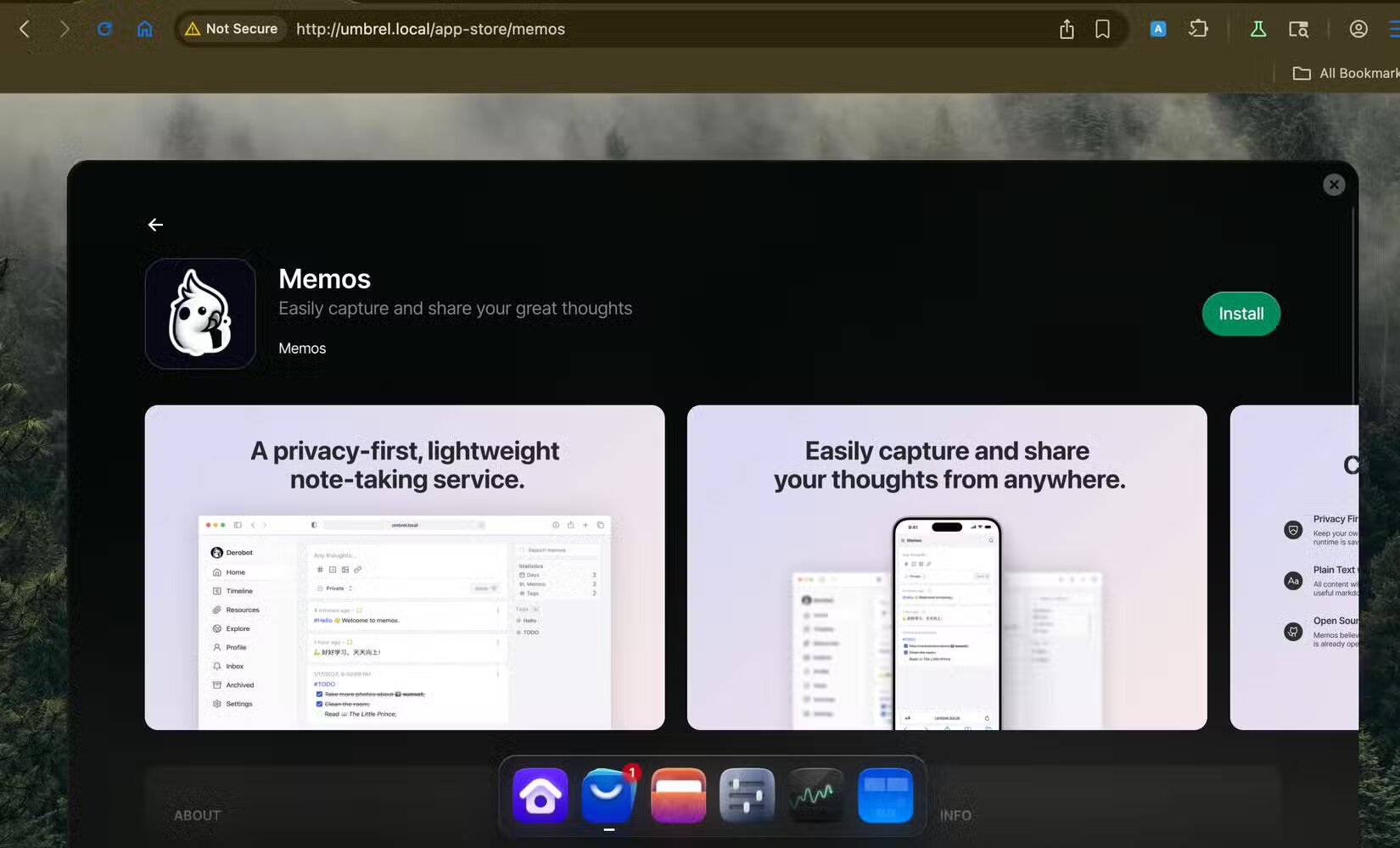
Docker is what makes umbrelOS, and other graphical server operating systems like it possible. Under the hood, the “apps” are just Docker containers.
Quick app launcher
The shortcuts to your installed apps are also on the main dashboard. You can click these shortcuts to open the apps in a new tab. Swipe left if you don’t see them. These shortcuts save you the trouble of having to find and memorize the port numbers or IP addresses of your apps. On umbrelOS, just click the app icon, and it will open in a new tab.
Spotlight-style search
Access settings, files, apps, and more in one place You can press the shortcut Command+K or Ctrl+K to open a search bar. This works like Spotlight search on macOS or the command palette on Windows.
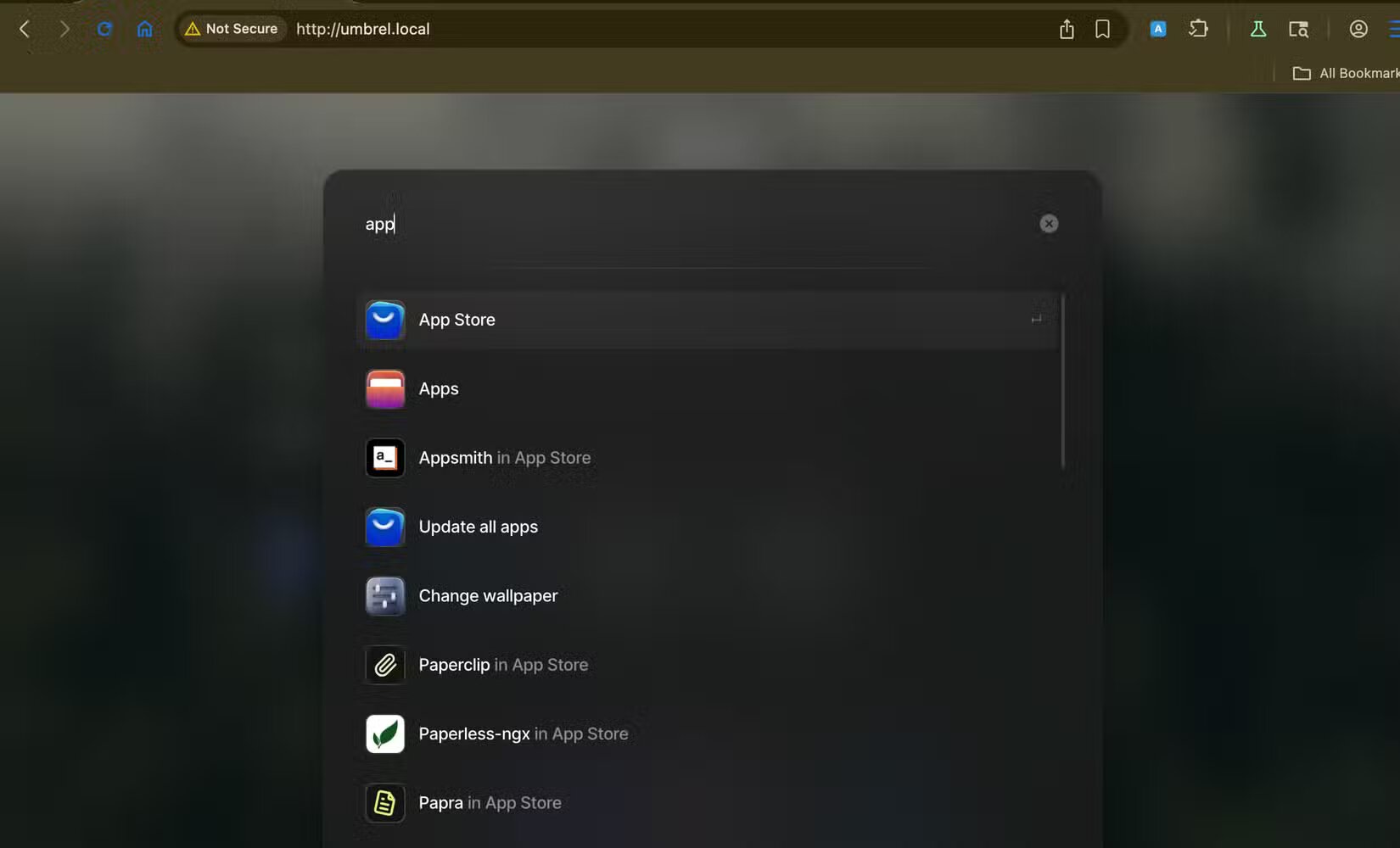
You can use it to launch installed apps or search for apps to install on the app store. It can look up files for you. It can do actions like rebooting the server or creating backups. And, of course, you can search through the files you have on this umbrelOS machine in that search bar.
Easily share files with other devices
You can go through umbrelOS settings to set up file and folder sharing.
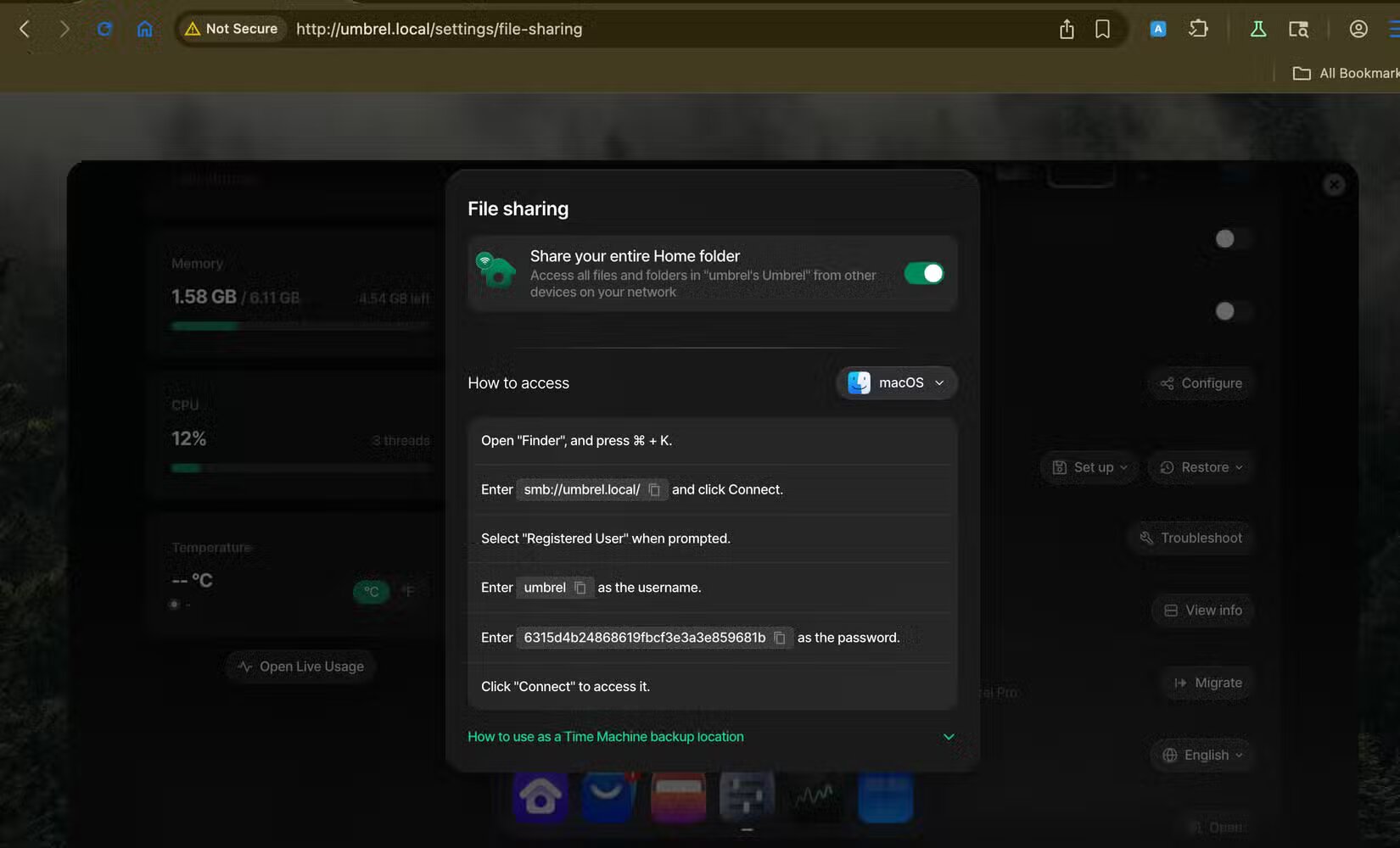
Select which folders you want to share, and then connect using the instructions, alongside the username and password it generates. Then, on the other device where you want to access the shared folders, enter the umbrelOS smb link. Your username and the password as shown in the settings app.
smb://umbrel.local/
Just like that, it’s now showing up as a network drive on my Finder.
Back up your entire server
When you’re trying to host things on your local network, some things are bound to break or fail randomly at some point. When that happens, it’s a good idea to have the right backup system in place. This is another part of the job this OS excels at wonderfully. On the settings menu, there is a backup menu with two buttons.
- Set up > Another Umbrel or NAS > External Drive
- Restore > Full Restore > Rewind
This will back up your umbrelOS machine to another umbrelOS machine on your network, network-attached-storage or (NAS), or a physical USB drive plugged directly into the umbrelOS machine.
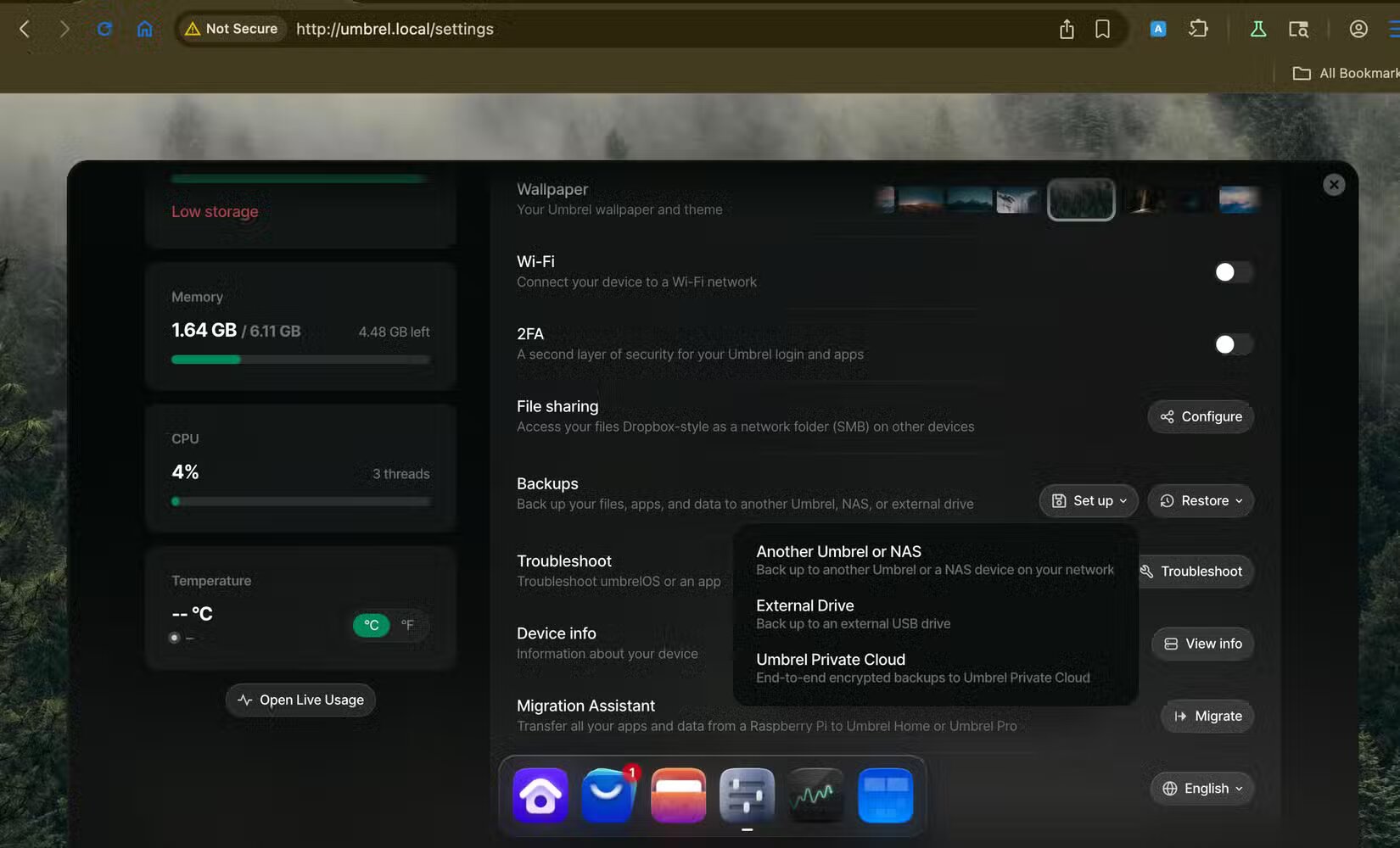
You can restore those automatic backups in two ways.
- Full Restore rebuilds your entire umbrelOS on a new machine.
- Rewind is a “time machine” that restores umbrelOS to a specific save point.
A polished point-and-click user interface for a home server operating system
The umbrelOS is completely free and it’s open-source. It has everything you could need to get a homelab started and make (there are some exceptions like running services which require HTTPS).
[mai mult...]