
Situatie
Optimization is impossible on a foundation of a 20% bounce rate. In modern event marketing, many organizers still fall into the trap of “guessing,” relying on intuition or vanity metrics that only provide an illusion of success. If your strategy is based on optimism rather than granular data, you’re on the verge of a costly failure.
How many of us have left an event feeling buoyed by a wave of “likes,” only to find later that the actual ROI has remained the same? The harsh reality is: while we focus on superficial visibility, vast amounts of data about actual attendee behavior remain untapped. Your 2026 strategy must move from “post and pray” to an architecture based on feedback loops and verified data.
Solutie
Why friends are more important than ad copy?
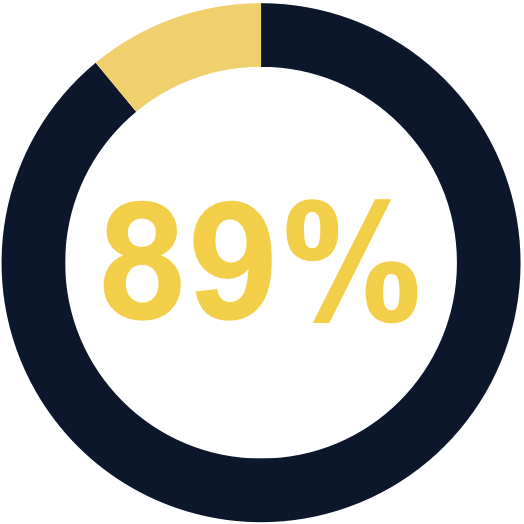 A landmark academic study published on arXiv (based on the VFestival and Creamfields datasets) demonstrates that the decision to attend an event is a deeply social act, not an isolated reaction to marketing. Analyzing the structure of a user’s social network can predict event attendance with an astonishing 89% accuracy.
This level of accuracy is achieved through advanced “graph embedding” techniques, such as node2vec, HARP, and Poincaré, that transform the network topology (who is connected to whom) into vector data that can be processed by neural networks. As everyone knows, the decision to attend is contagious: the influence exerted by one’s close circle is a much stronger indicator than repeated exposure to advertisements.

Three essential data pillars powering sponsor ROI
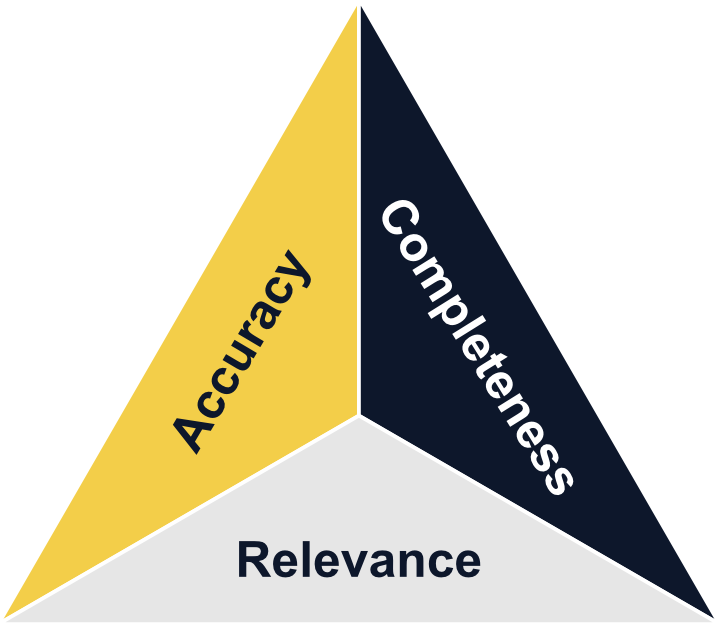 According to “The 2025 Event-Data Playbook,” the success of any B2B event rests on three pillars: Accuracy, Completeness, and Relevance. Incomplete data, such as missing “Seniority” or “Job Function” fields, is a major barrier to personalization. If you don’t know who the decision maker is and who the doer is, your message will fail miserably.
The consequences of poor data quality are critical:
- Low sponsor ROI: Sponsors invest in clean databases; if the data is inaccurate, the value of leads decreases, and sponsors will not return.
- Wasted resources: Marketing budgets are spent on “ghost” contacts or roles irrelevant to the targeted industry.
- Decreased engagement: People ignore communications that don’t reflect their current professional interests.

The power of “above the fold” and simplicity
Visitor attention is a finite resource, and heatmaps confirm that interest drops off dramatically below the fold. Behavioral analysis on registration pages shows that any point of friction leads to abandonment. To maximize registrations, you need to make the process “stupid-simple.” We recommend placing your main Call to Action (CTA) above the fold so that it is immediately visible. At the same time, data suggests that reiterating the CTA in the middle of the page is essential to capture users who have scrolled through the event details. Don’t leave the visitor searching for the registration button; it should be a click away at all times during the navigation.

CRM as an augmented Artificial Intelligence hub
The evolution of CRM systems (such as the platforms provided by CRM4you/CAS Software AG) has transformed these tools from simple agendas into Augmented Artificial Intelligence hubs. We are no longer talking about passive databases, but about systems that monitor product interests, birth dates, and communication preferences in real time.
A major innovation is the integration with platforms such as askallo for online surveys. This integration allows feedback to be collected without the need for a private server, with data automatically transmitted back to the CRM for analysis.
A modern CRM, such as CAS genesisWorld, must be more than just an address book; it is a command center for precision marketing. We recommend implementing phonetic search functions to eliminate human input errors. This ensures that you don’t miss out on a VIP just because their name was spelled differently on a registration form.
Furthermore, the interconnected search function allows you to quickly identify “ghost” leads, customers who are in the system but have not responded to any campaigns in the last two years.

Testimonials as a tool for legitimization and social proof
According to communication specialist Liliana Uleia, testimonials are conversion tools that must directly address the audience’s pain points. The specialist’s role is to identify relevant participants whose experiences can validate the value of the event for other potential customers.
For maximum credibility, prioritize video or audio formats over plain text. The authenticity of a voice or a filmed reaction provides much stronger social proof, demonstrating that the event has generated real change. Well-chosen testimonials act as a trust filter that accelerates the purchase decision.

Your event doesn’t end when the lights go out in the hall. The next edition is being built now, through post-event data analysis: dropout rates for recap videos, sentiment scores from surveys, and the effectiveness of follow-up channels.
Rigorous analysis turns feedback into profit. In 2026, the difference between a sold-out event and a mediocre one will be dictated by your ability to close the feedback loop and act on data, not assumptions.
See how we help: www.enjoee.it
Leave A Comment?