How To Remove Wallpaper History
In case you want to remove the history that shows the last wallpapers used, the instructions below will show you how to proceed in order to do that.
[mai mult...]
Soluții pentru problemele tale IT

In case you want to remove the history that shows the last wallpapers used, the instructions below will show you how to proceed in order to do that.
[mai mult...]Should you encounter any issues with enabling the option Set time zone automatically the following steps can help you with solving the problem.
[mai mult...]Rocky Linux is an open-source Linux distribution developed by Rocky Enterprise Software Foundation. It is an enterprise OS intended to be a downstream, complete binary-compatible release that uses the Red Hat Enterprise Linux OS source code.
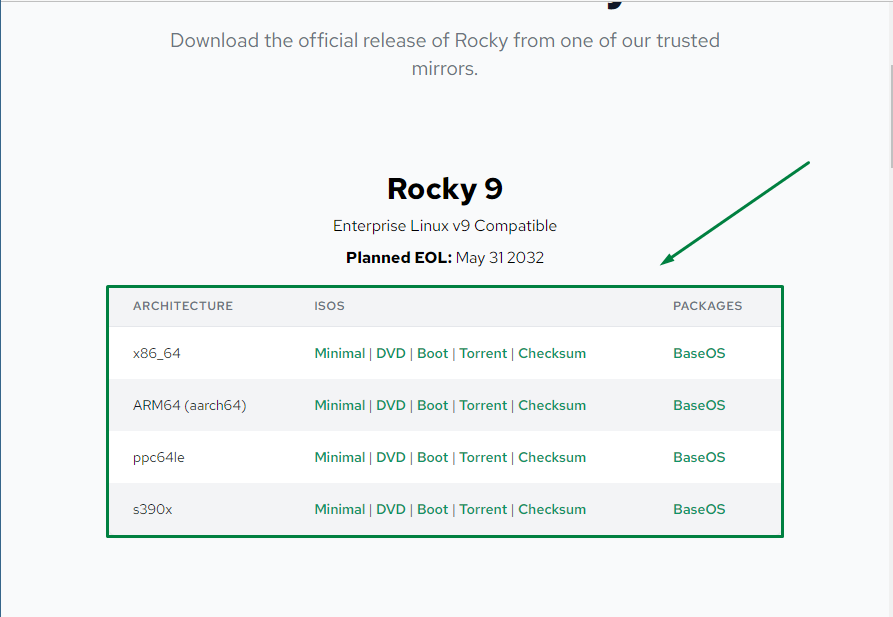
Using a browser of your choice, browse to https://rockylinux.org/download/ and, depending on your system and use case, select one of the available ISO image downloads:
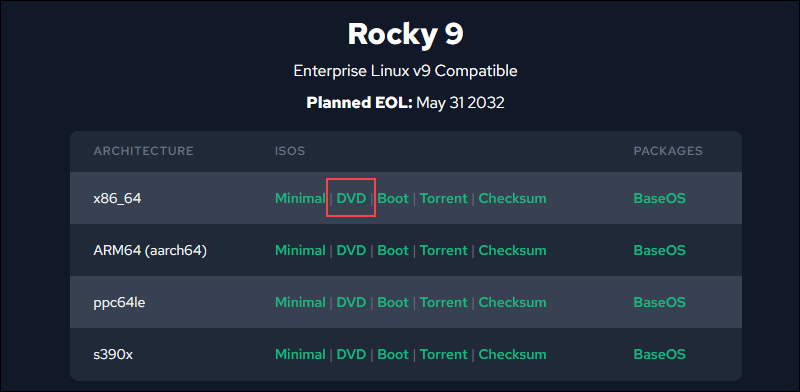
For this tutorial, we will install Rocky Linux on a 64-bit architecture. We have downloaded the DVD ISO image, which contains the BaseOS and AppStream repositories.
The Boot and Minimal versions are used when installing the OS from another source (such as an HTTP repository of the binary files) or to enter Rescue Mode.
Depending on which system you will create the bootable USB drive, use one of the following tools:
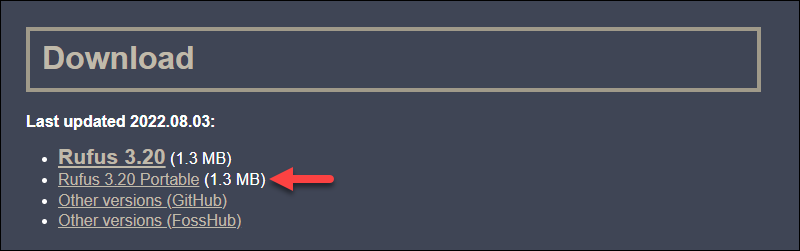
1. Browse to https://rufus.ie/en/# and download the latest Rufus version. For this tutorial, we will use the portable version:
2. Open Rufus and insert a USB stick. The program automatically recognizes and selects it.
3. Click the SELECT button and select the Rocky Linux 9 ISO image you have previously downloaded.
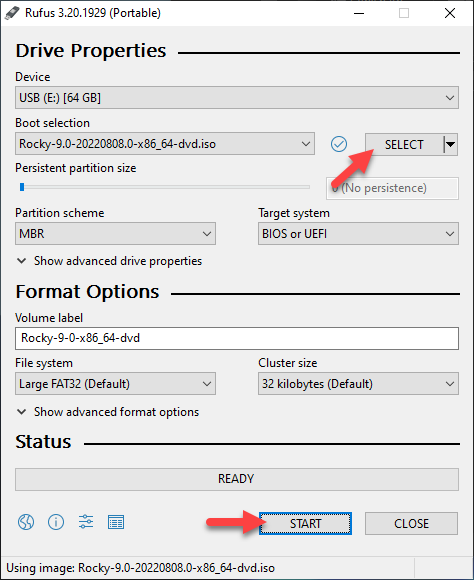
4. Click START to write the ISO image and create a bootable USB drive.
1. Click the Show Applications button, and in the search dialog type Startup Disk Creator.
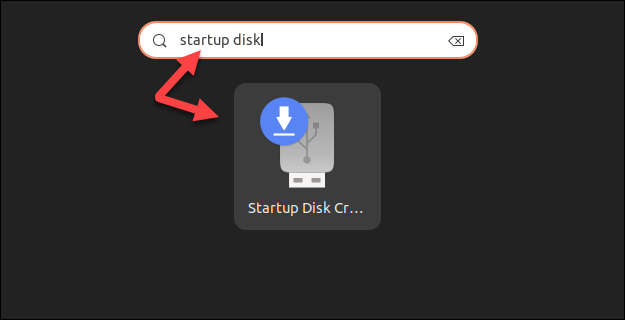
2. In the Source disc image section, click Other. Select the Rocky Linux ISO image you have previously downloaded.
3. In the Disk to Use section, select your USB drive.
4. Click Make Startup Disk and wait for the process to complete.
To boot up Rocky Linux from the USB, follow the steps below:
1. Insert the Rocky Linux USB drive.
2. Turn on the machine or restart the system. The USB drive should boot automatically. If it does, skip the next step.
If the USB doesn’t boot, manually select the USB boot device in the Boot Menu or BIOS/UEFI.
3. Access the boot menu by tapping the designated boot key for your machine as soon as the computer turns on. The key differs based on the machine vendor, so Google the one for your device.
4. Select the USB boot device using the arrow keys in the boot menu. The system starts loading the Rocky Linux installation menu.
After booting to the installation menu, start the installation by selecting Install Rocky Linux 9.0.
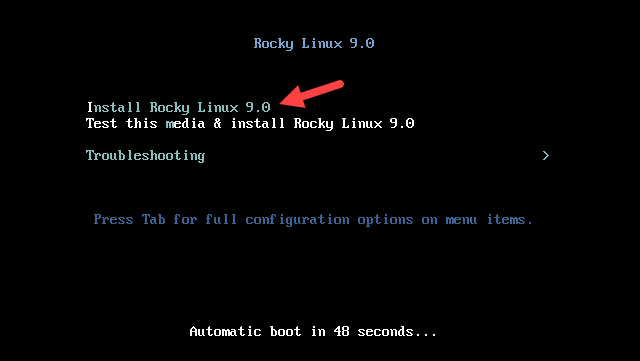
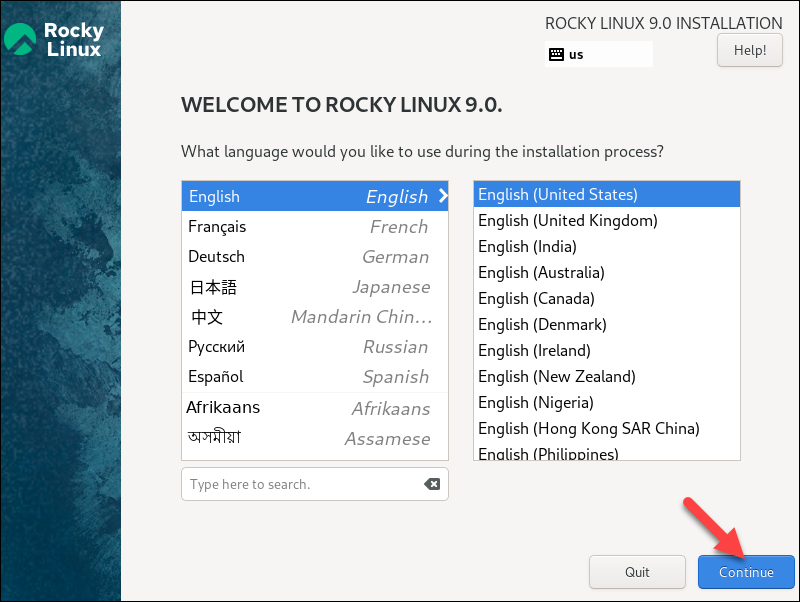
Once the Rocky Linux Anaconda installer loads, the Welcome page prompts you to choose the language for the installation process. After selecting, press Continue.
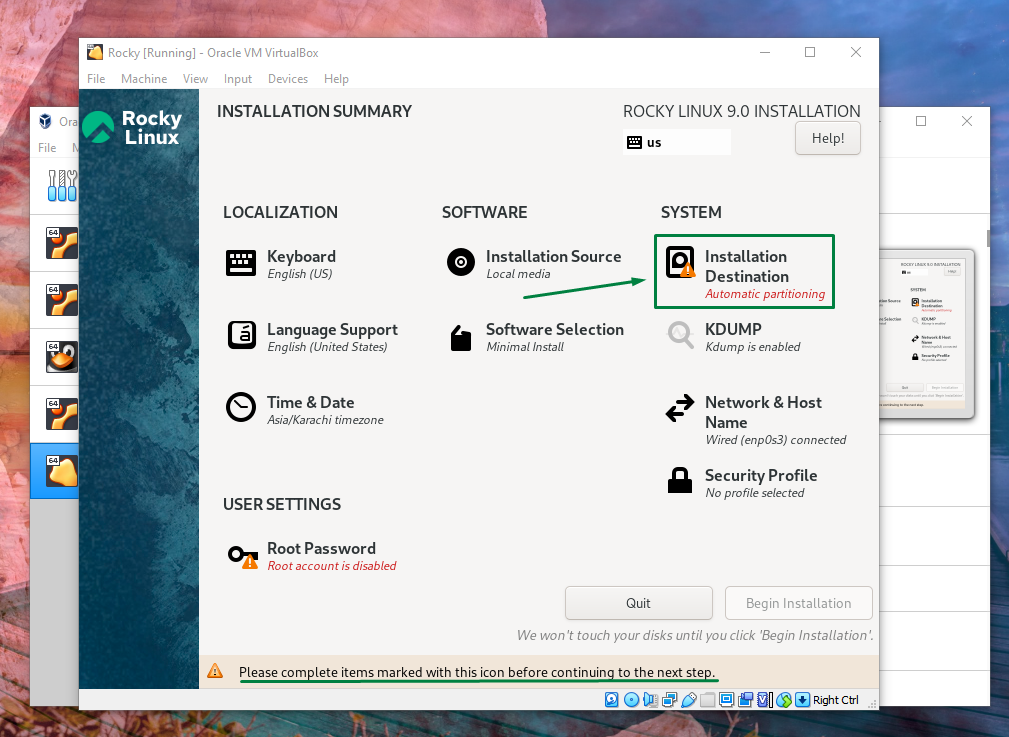
The installation summary menu appears with crucial parameters that need to be configured before the installation.
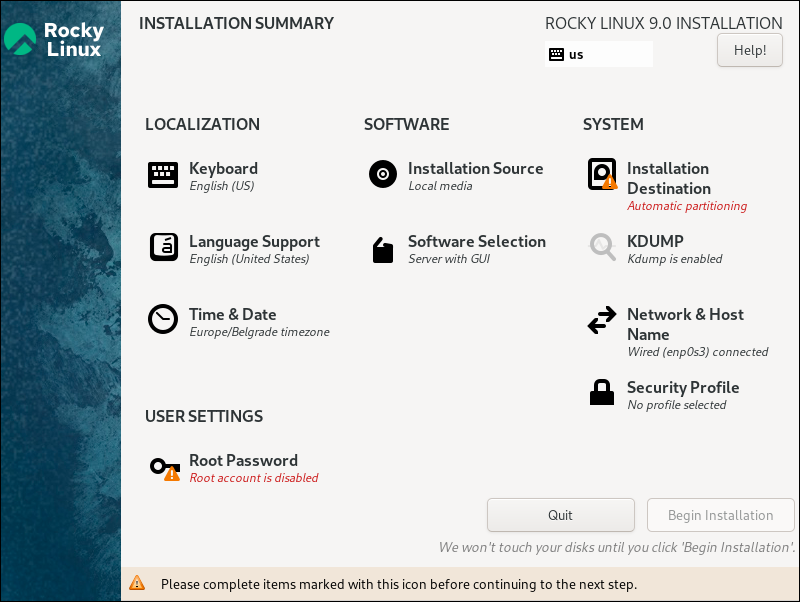
Select each item to configure the specified setting and click Begin Installation when finished. The sections below explain each of the configurable parameters.
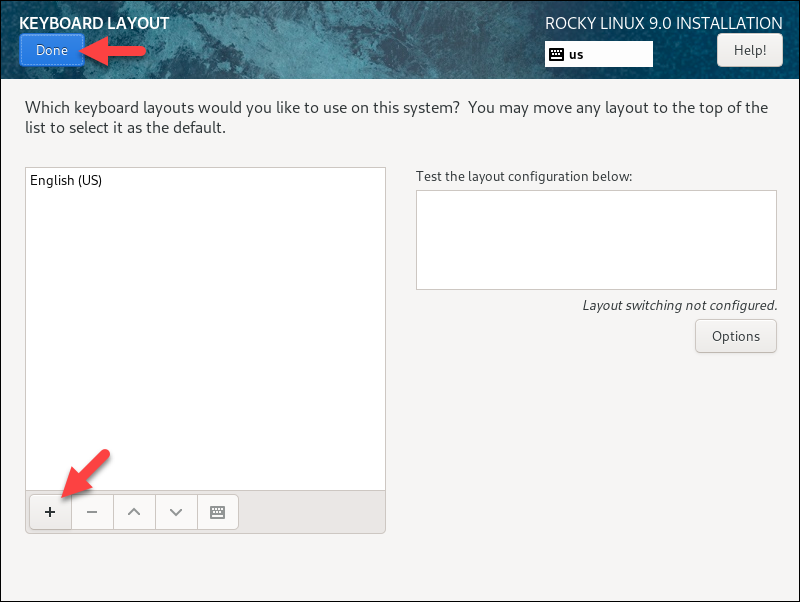
Select the Keyboard option to add keyboard layouts. The default keyboard configuration depends on which language you selected. Click the + button to add a keyboard layout aside from the default one.
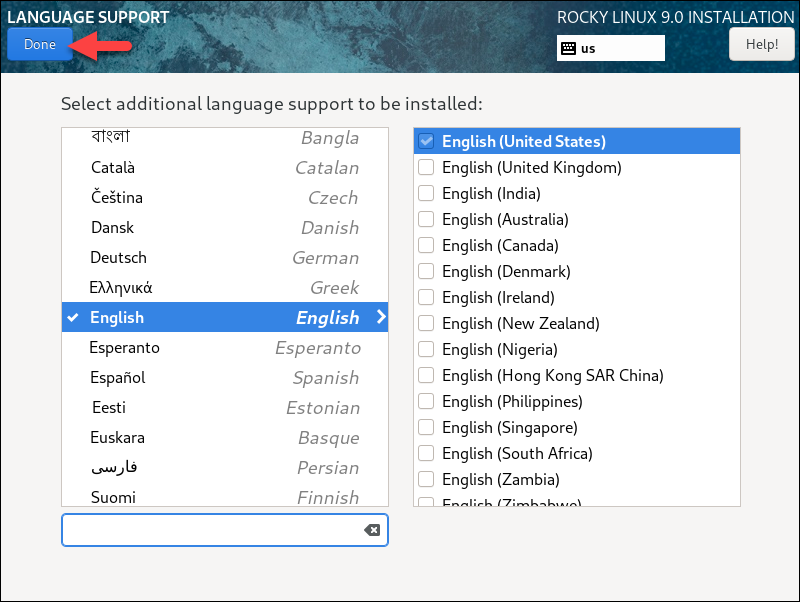
Select the Time & Date option to set up the time and date. The installer automatically detects the region and time zone if you have internet access. Alternatively, set the parameters manually by selecting the region and city from the dropdown menu and set the time and date in the bottom part of the screen.
Turn on the Network Time switch to keep the time and date synchronized with the internet time.
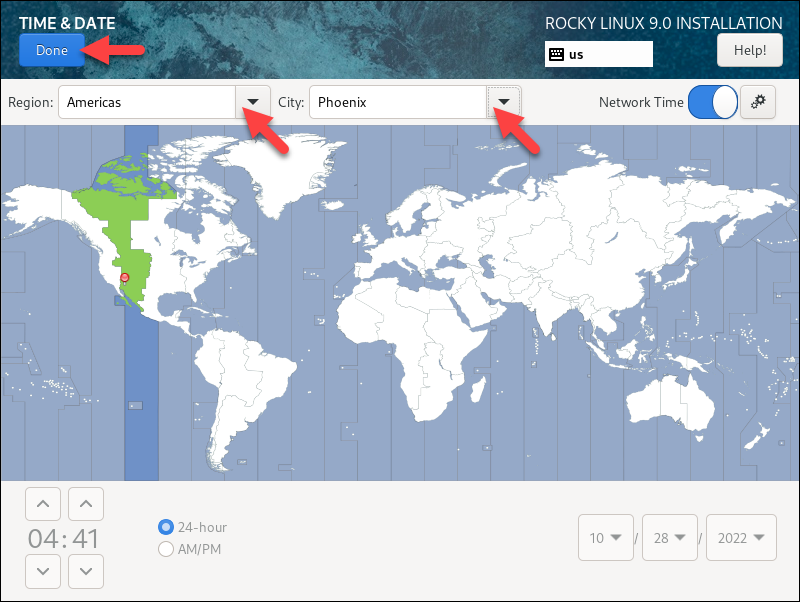
When finished, click Done to save the changes and go back.
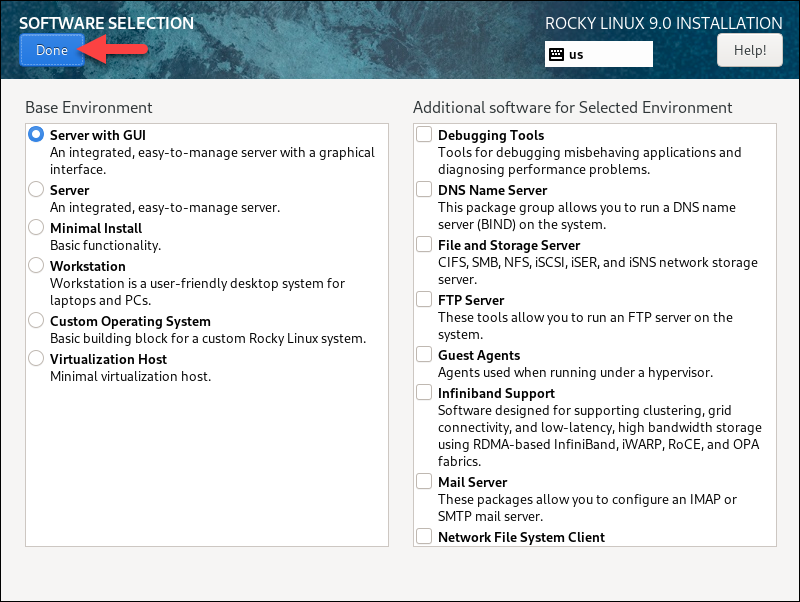
When finished, click Done to return to the installation menu.
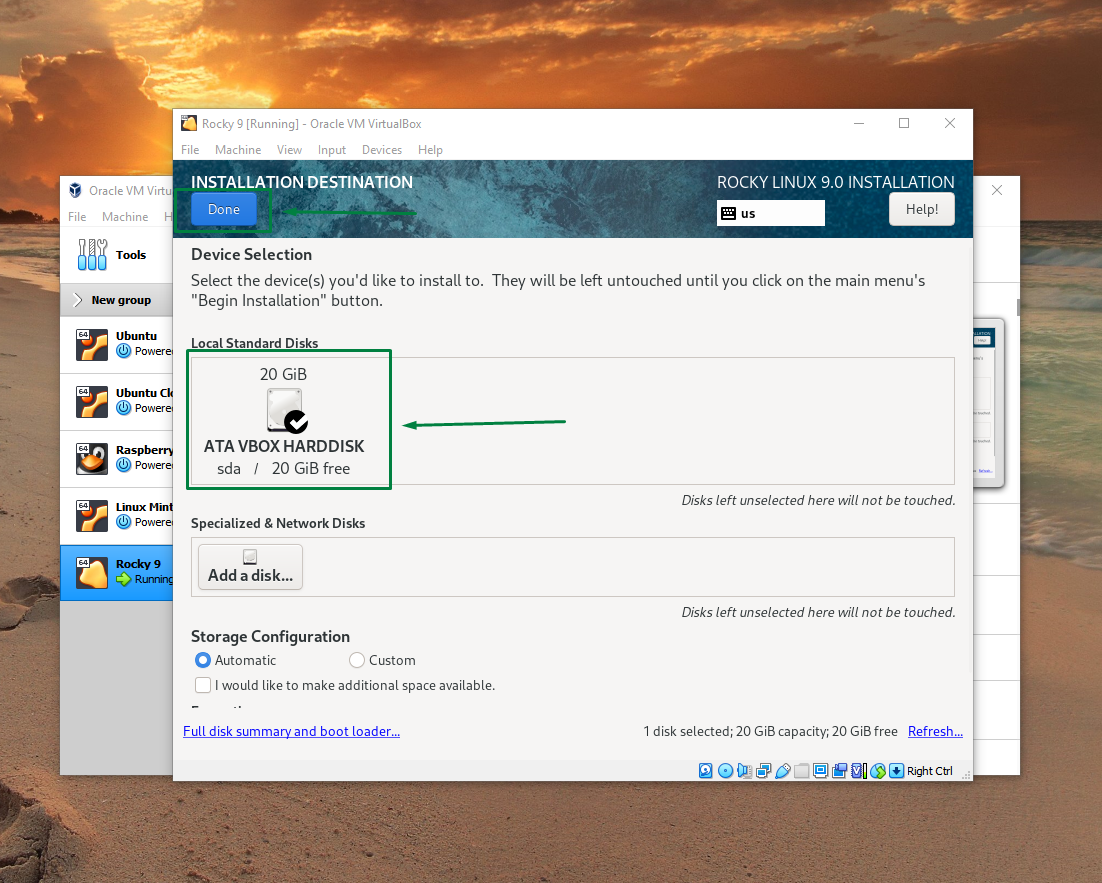
Under the SYSTEM section, click the Installation Destination item to select and partition the hard disk for the installation. Ensure that the disk on which you are installing Rocky Linux has a checkmark.
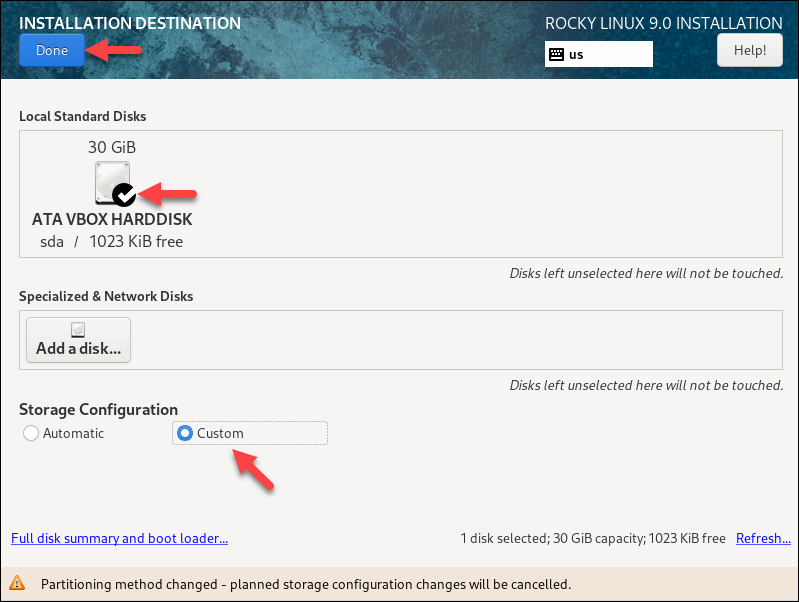
Under Storage Configuration, choose whether to configure the storage automatically or if you want to create custom partitions. If you choose Custom, click Done, and the Manual Partitioning window appears.
In the Manual Partitioning window, create the custom partitions for your OS and select a file system type.
1. In the dropdown menu, select Standard Partition as the partitioning scheme:
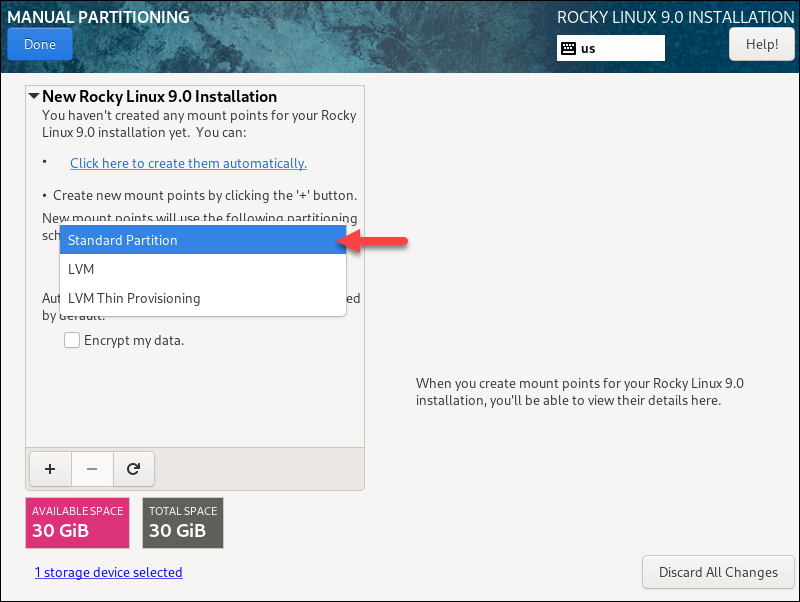
2. Click the + button to add a new partition.
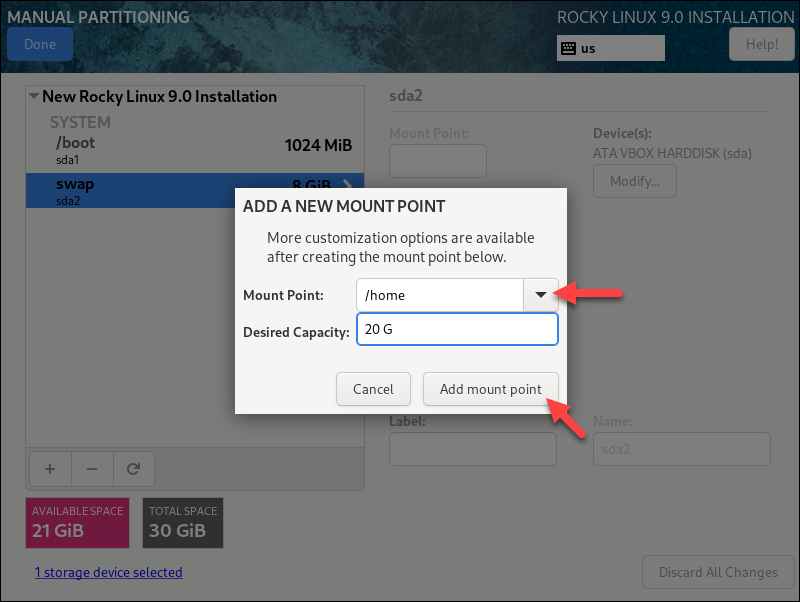
For this installation, we will create the following partitions:
Add each partition by clicking the + button and specifying the size. Click the Add mount point button to create the partition.
3. When finished, click Done to exit the partition manager.
4. A window appears showing the summary of changes to be written to disk:
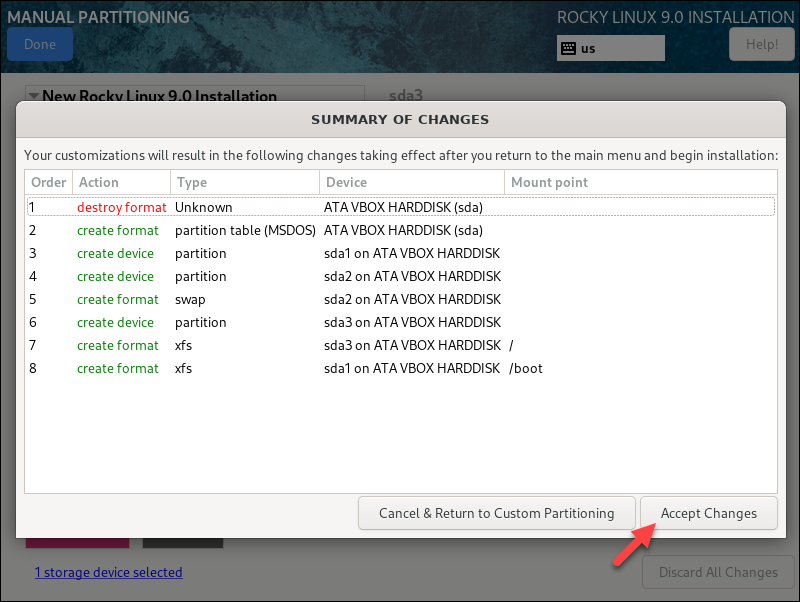
Click Accept Changes to proceed with the partitioning or Cancel to return and make changes to the partitions. When the partitioning finishes, the wizard returns to the installation menu.
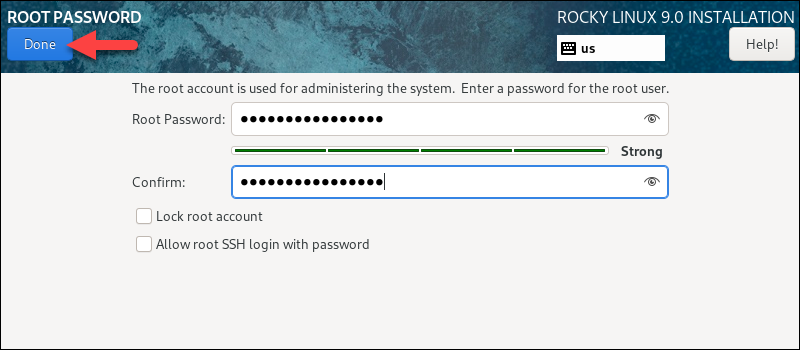
Under the USER SETTINGS section, click the Root Password item to set up an administrator password for the system. Enter the password and confirm it. Remote logins via SSH are disabled by default. Check the Allow root SSH login with password option to enable it.
The password strength indicator shows whether the password is strong enough. After setting up the password, click Done to return to the installation menu and begin the installation.
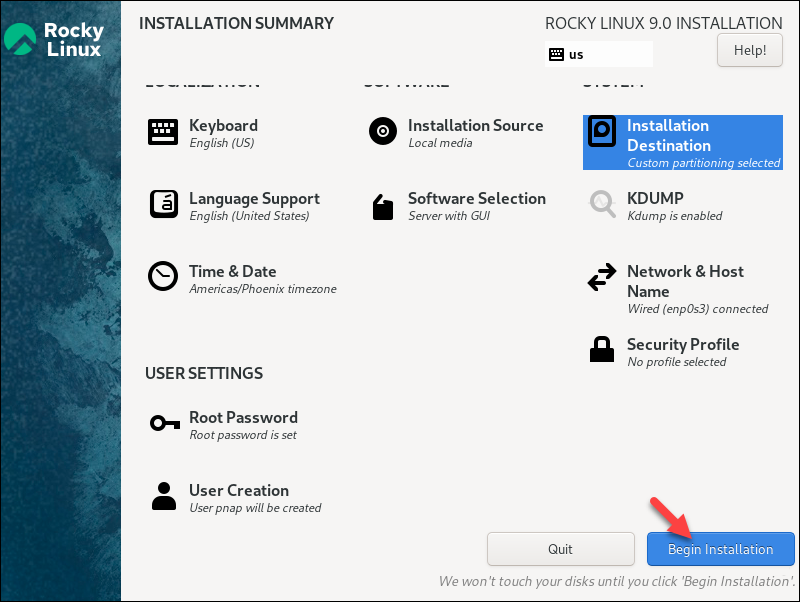
Under USER SETTINGS, click the User Creation item to create a user for the OS. Enter a name, and choose a login username and password. Retype the password and check the password strength indicator.
After configuring all the settings in the installation menu, click the Begin Installation button to start installing Rocky Linux.
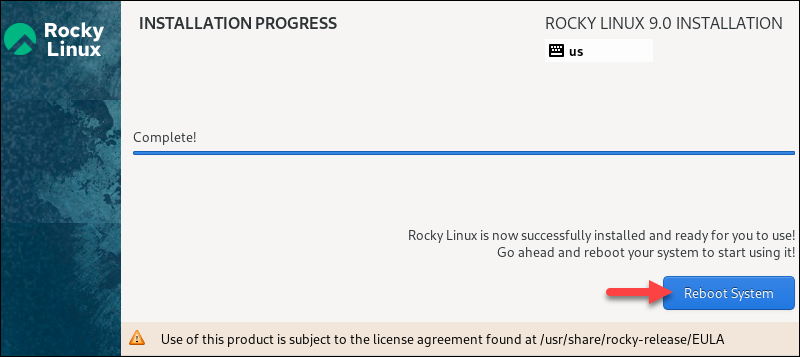
When the installation completes, take out the USB drive and click the Reboot System button to boot into the fresh Rocky Linux 9 installation on your machine:
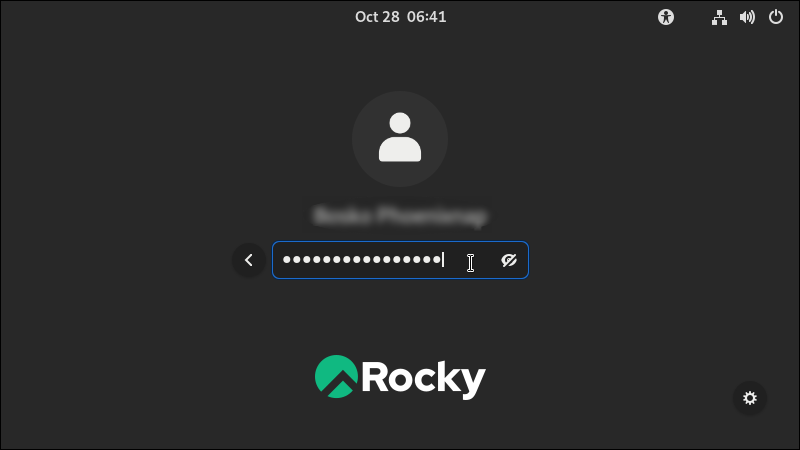
The installation is complete. You can start using Rocky Linux on your machine.
[mai mult...]If you have somehow upgraded to Windows 11 from Windows 10, but are unable to install new Windows 11 updates as your requirements are not met, do not worry. Microsoft has itself detailed a registry hack that allows you to install Windows 11 updates even on unsupported hardware.
[mai mult...]If you are frustrated with the slow and laggy Photos app on Windows 11, worry not. You can still get the trusty Windows Photo Viewer right from Windows 7 to Windows 11. I am sure it will quickly become the best photo viewer on Windows 11 for you. So go ahead and try this registry hack on your Windows 11 PC.
[mai mult...]Linux just like other operating systems is widely used especially when it comes to software development, coding, and some other similar applications. Rocky Linux is one of the Linux distributions, it is based on Cent-OS and is named Rocky after one of its co-founders.
Rocky 9 comes with 10-year free support program and provides the opportunity to Linux users to migrate from other Linux distributions free of charge, here are some steps that one needs to follow to install this Linux on VirtualBox:
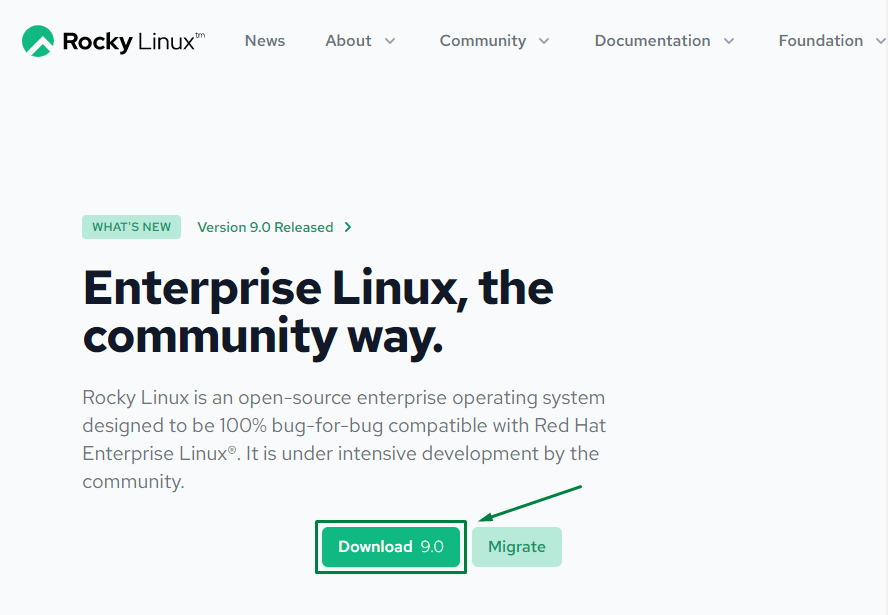
Step 1: Visit the official website of Rocky Linux and click on Download 9.0 to move download section:
Step 2: Next, select the suitable architecture and download the torrent file do not go for the minimal option as it only comes with the terminal version of Rocky:
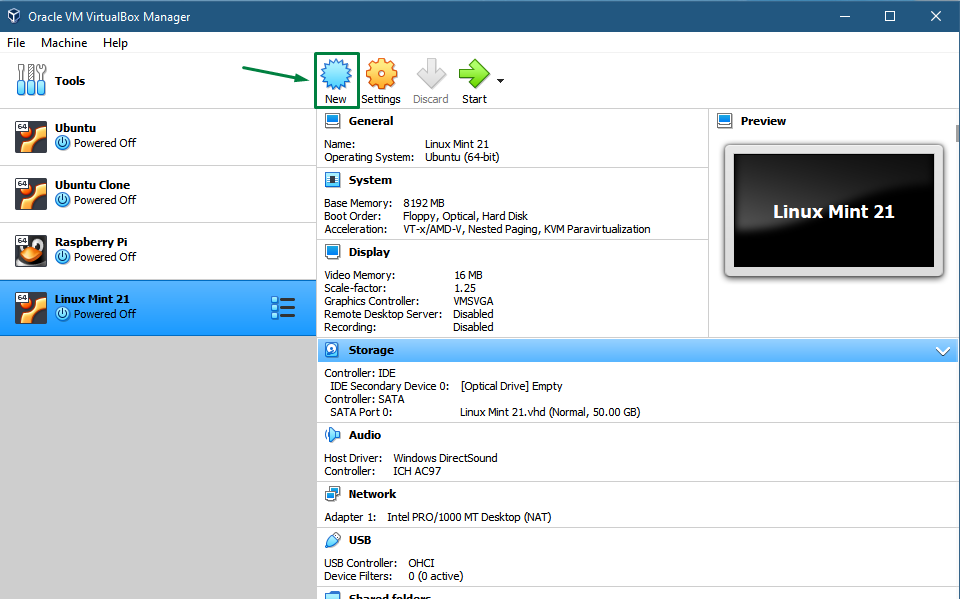
Step 3: Once the file is downloaded run the VirtualBox and click on New option from the top:
Step 4: Next Name your virtual machine and select the suitable directory under the Machine Folder:
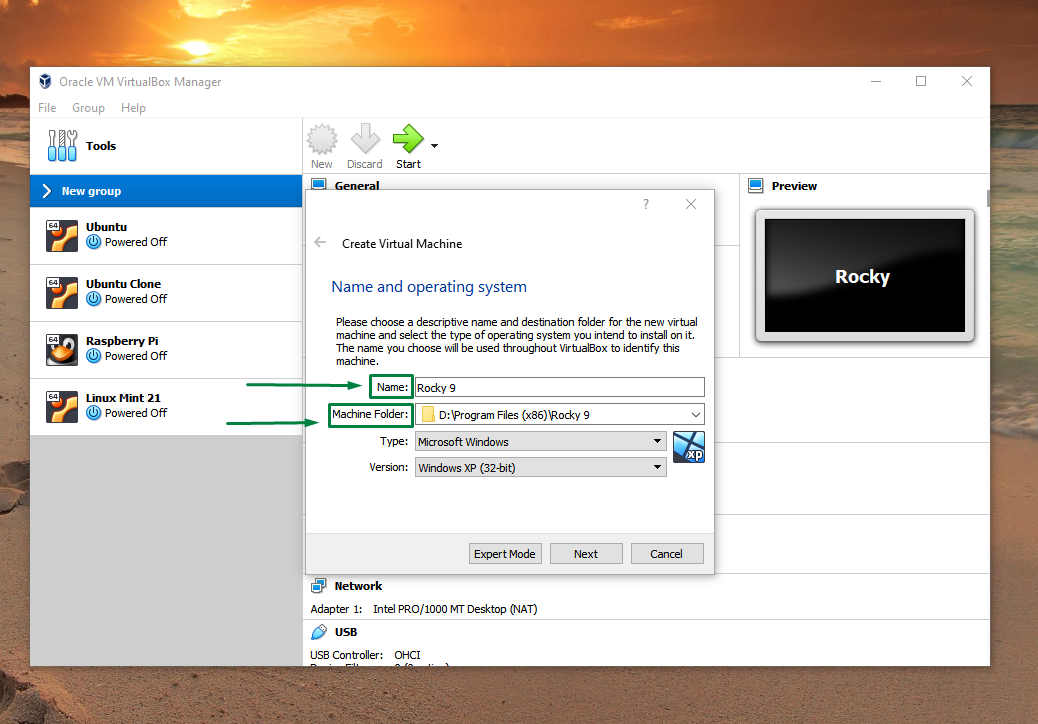
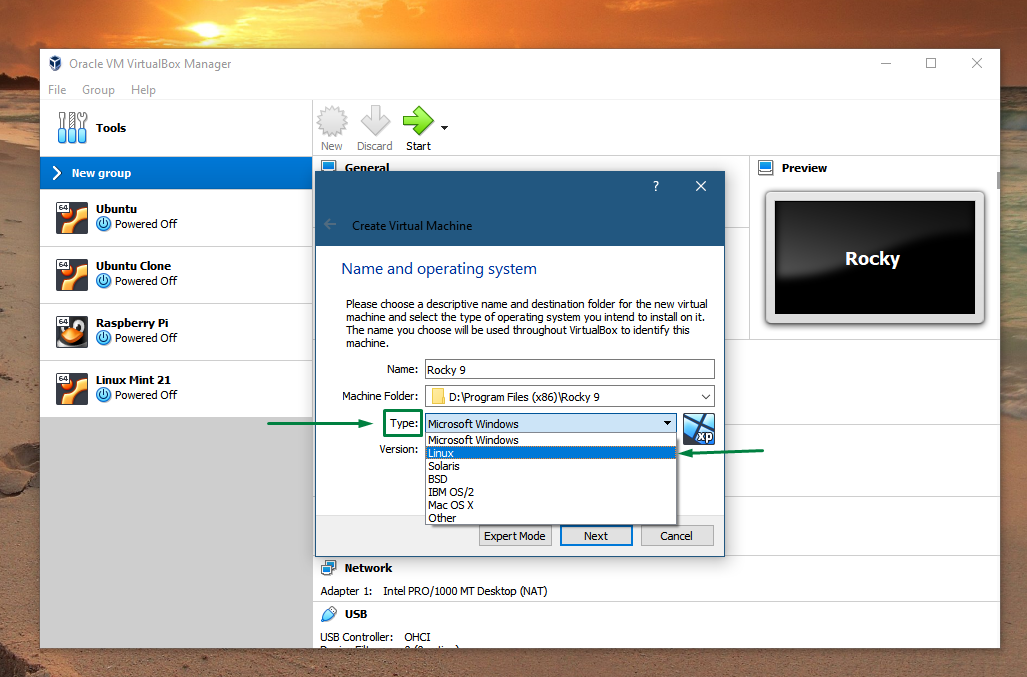
Now select the Type of operating system that is Linux:
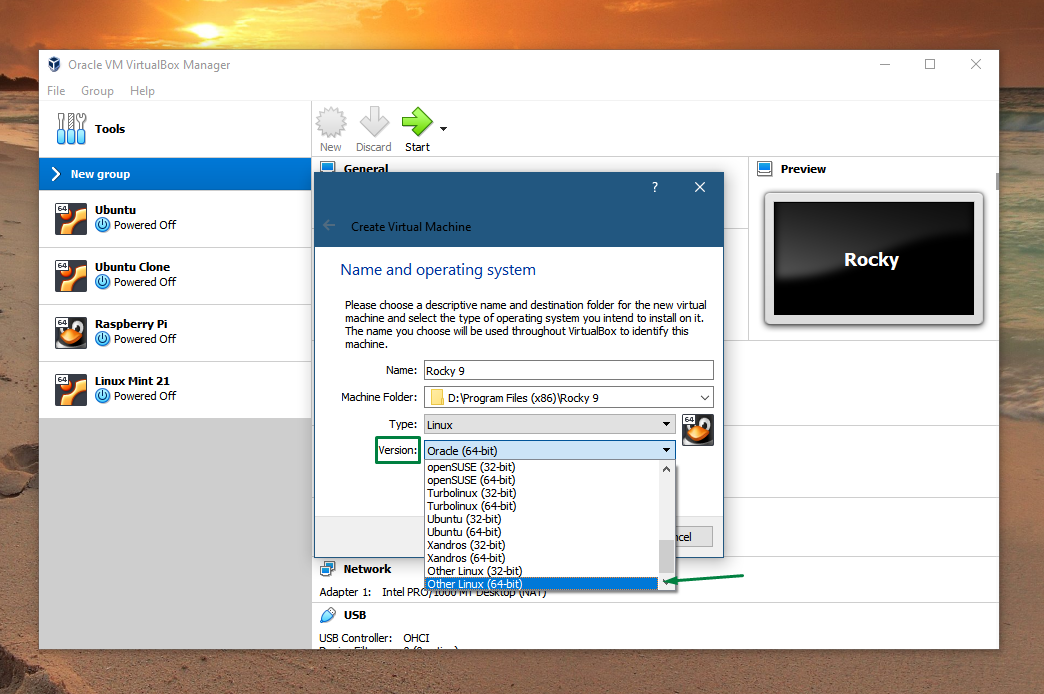
Step 5: Next select the version of operating system that is other Linux (64-bit):
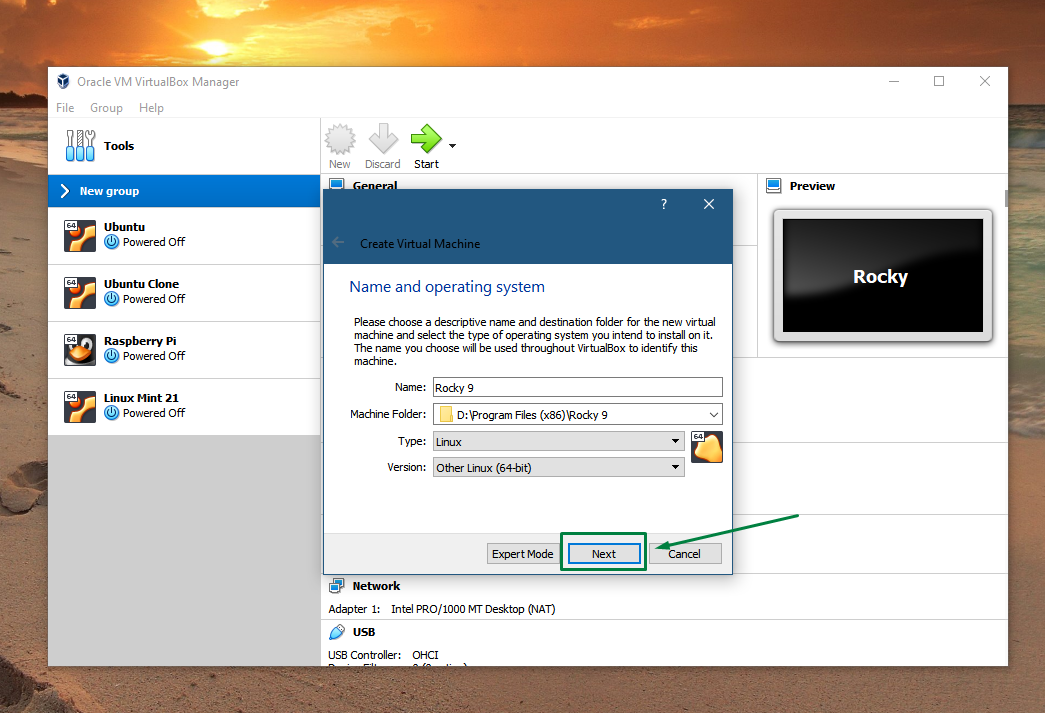
Once you have selected all the relevant information then click on Next:
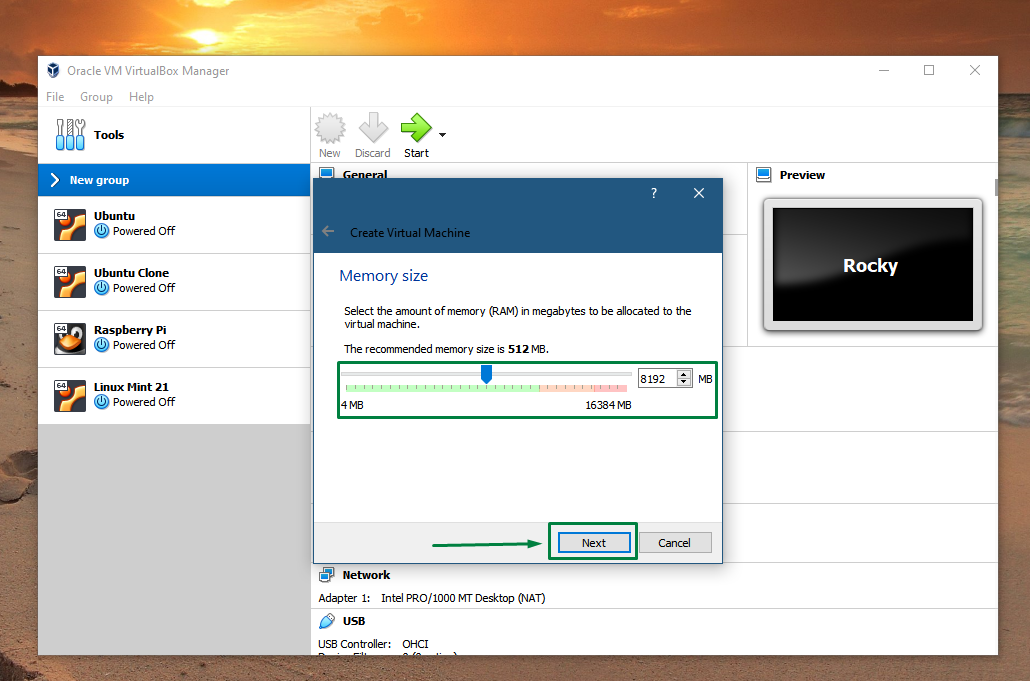
Step 6: Now assign the RAM for your virtual machine for instance I have given the RAM of 8GB:
Step 7: Next, choose the type of hard disk for virtual machine by selecting Create a virtual hard disk now and after that click on the Create option:
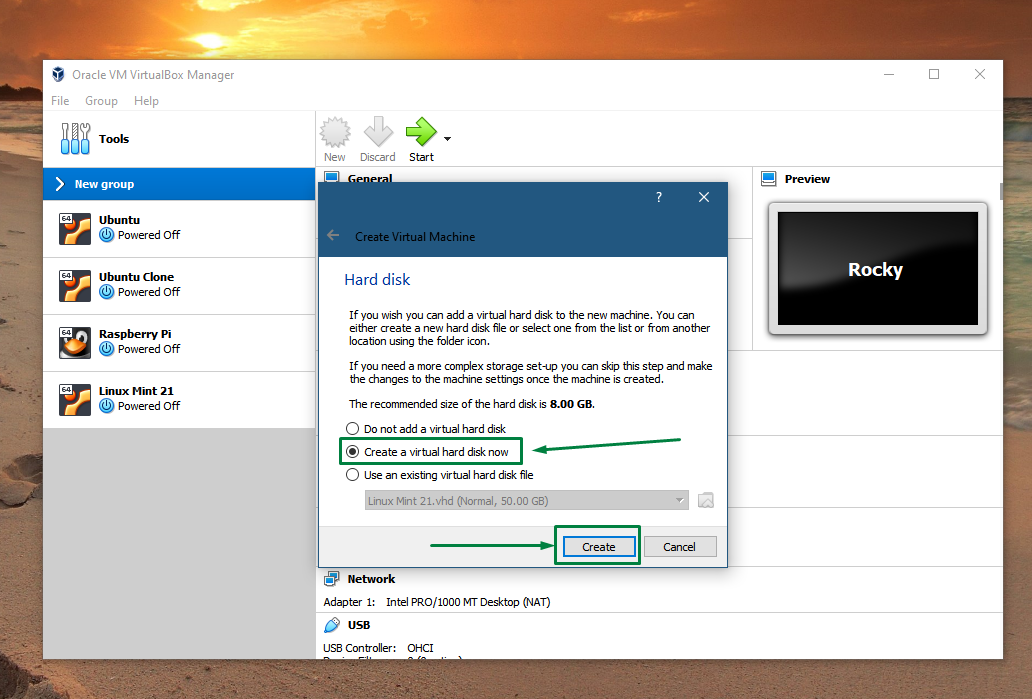
Step 8: Now select the VHD (virtual hard disk) as the file type and click on Next:
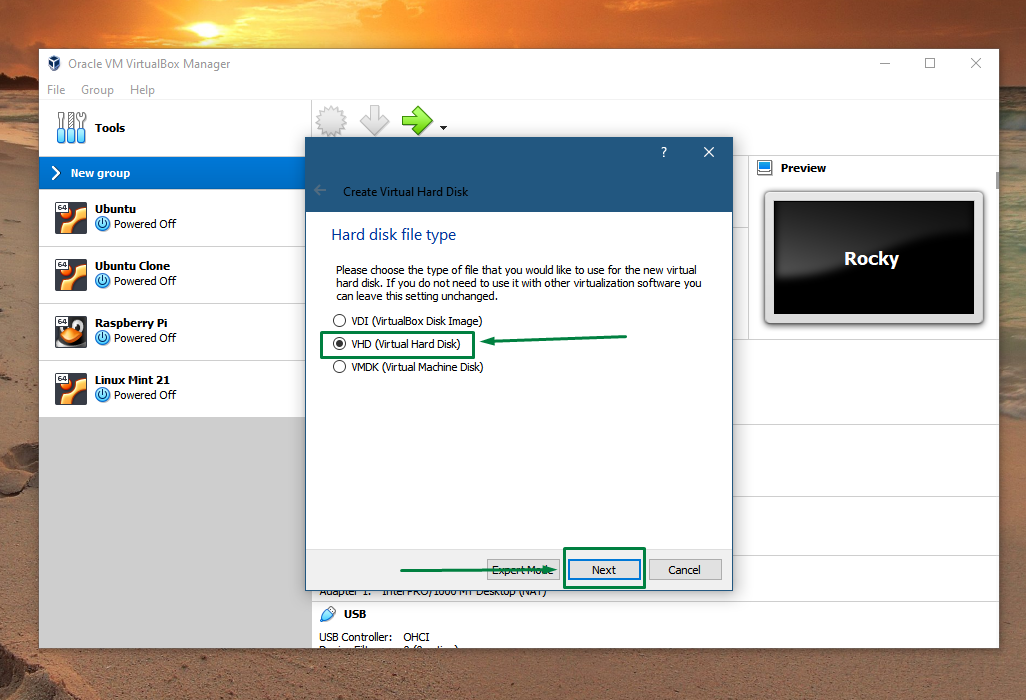
Step 9: Next, select the type of size of physical hard and for that select the Dynamically allocated option and then click on Next:
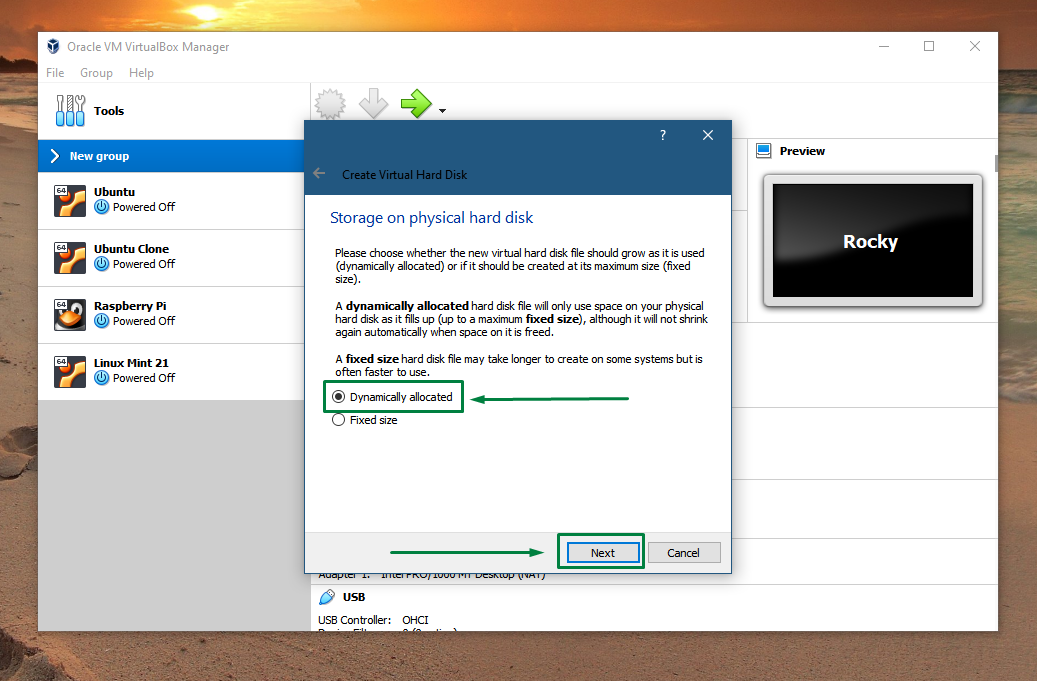
Step 10: Now allocate the storage size for the virtual machine and try to set it about almost 20GB in order to make the installation process run smoothly:
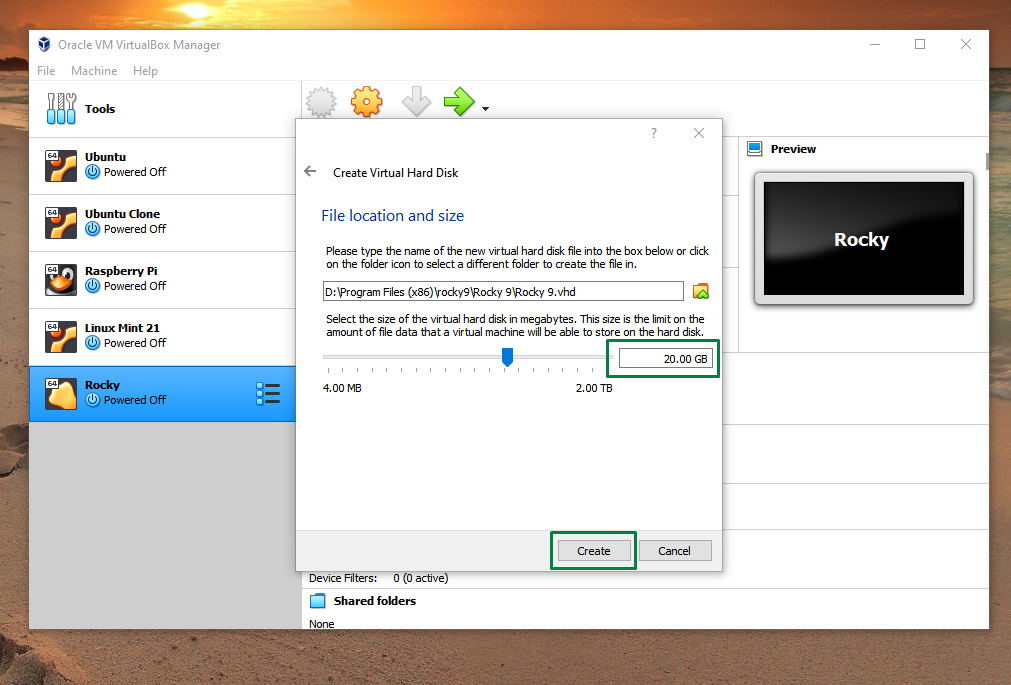
Step 11: Now the virtual machine is created so next click on Start button from the top:
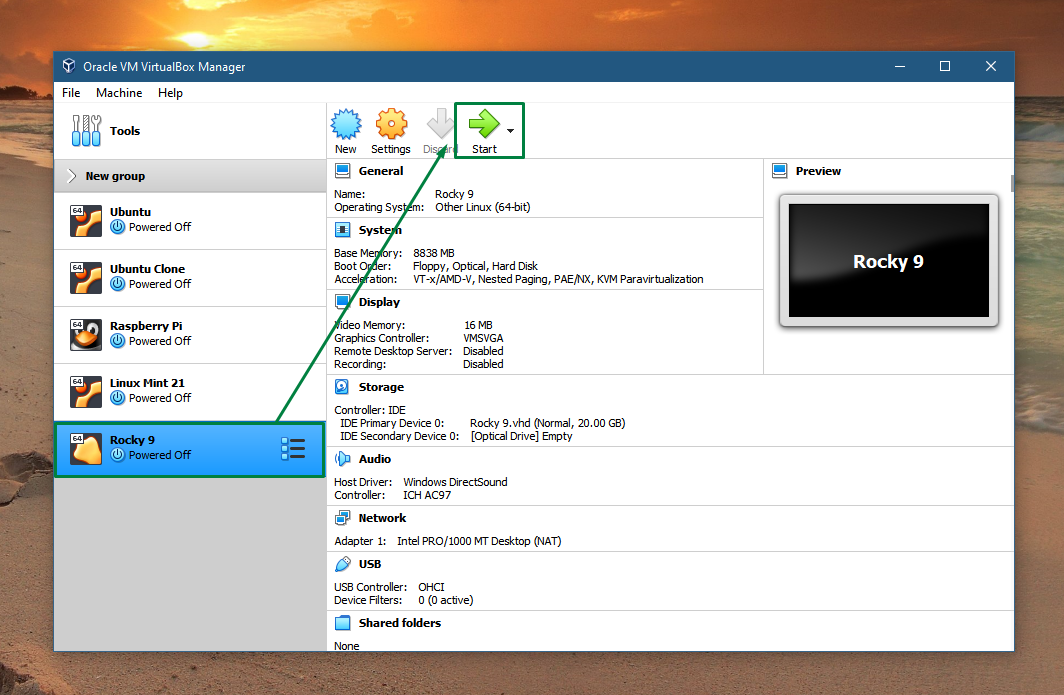
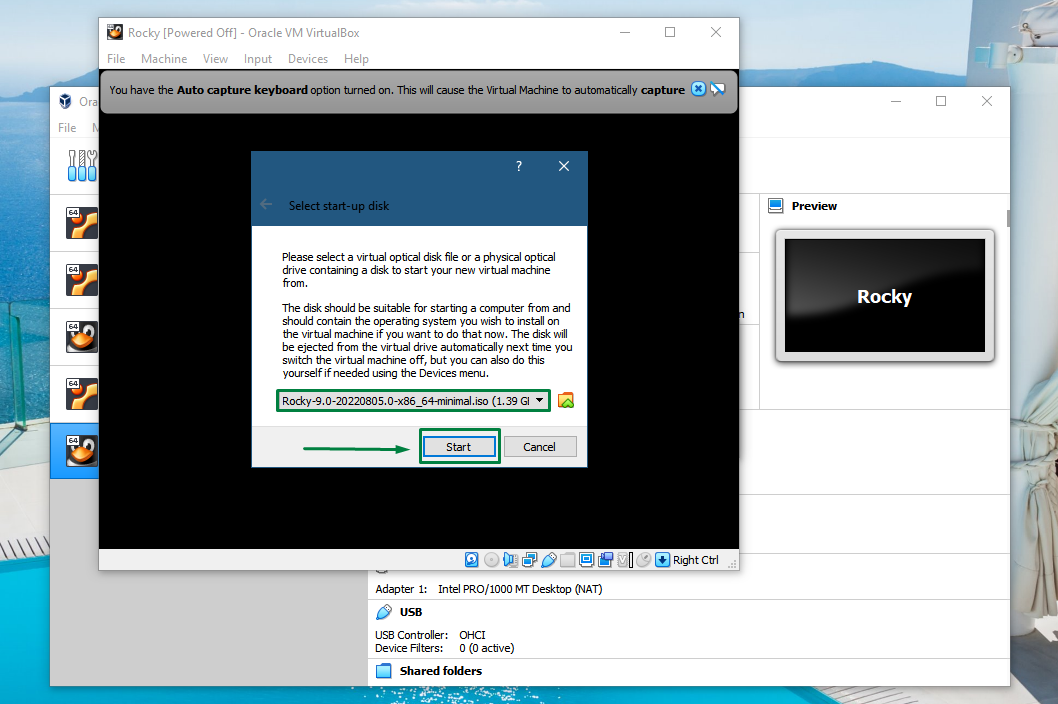
Step 12: First under the start-up disk click on the folder icon to select the disk image, from there in the Optical Disk Selector click on ADD and then select the downloaded file. After that click on Open and the respective file will be selected.
Step 13: Now click on Start to further move to the installation process:
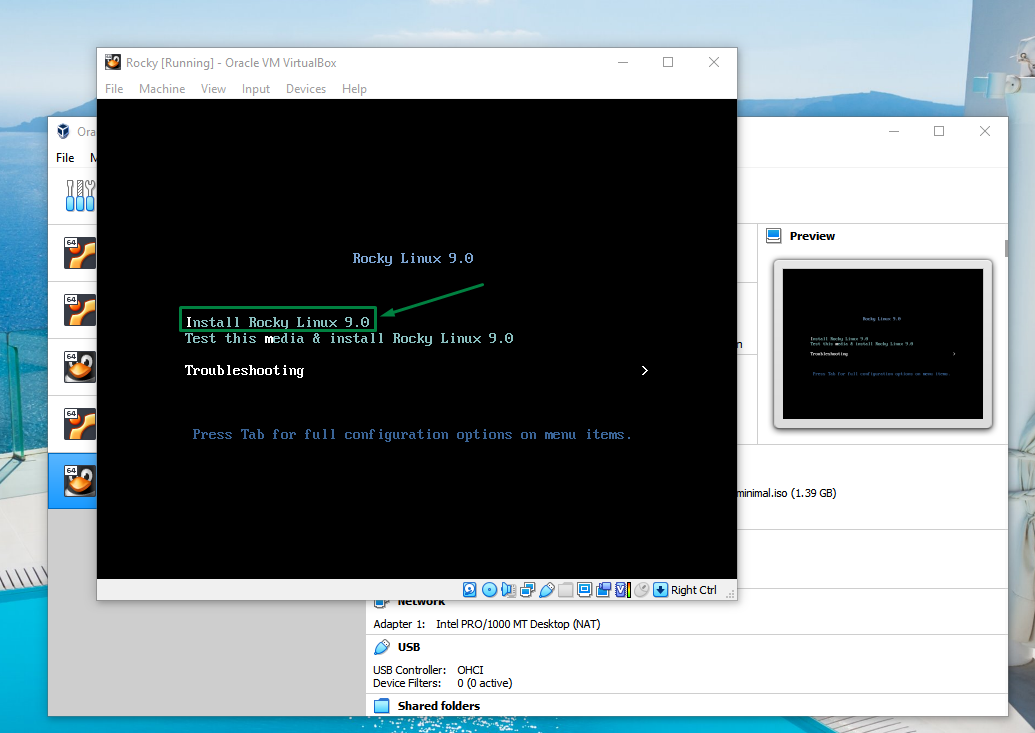
Step 14: Next, select the Install Rocky Linux 9.0 to begin the installation process:
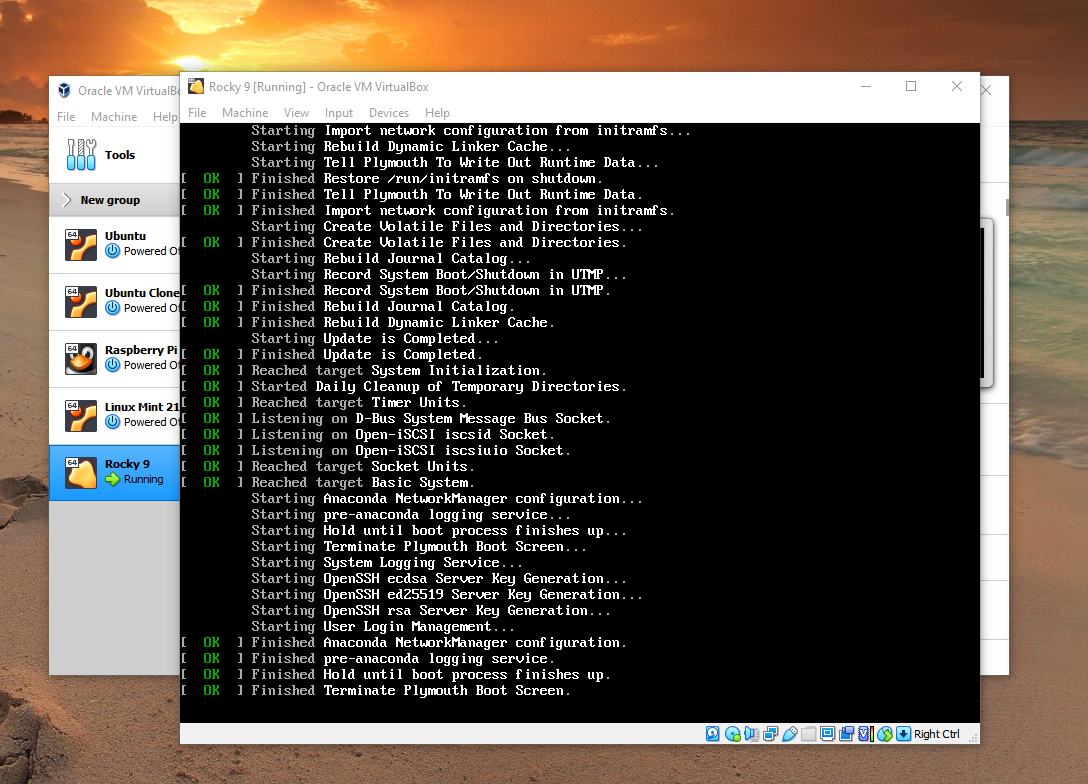
The installation process will start and take time:
Step 15: Next, select the suitable language:
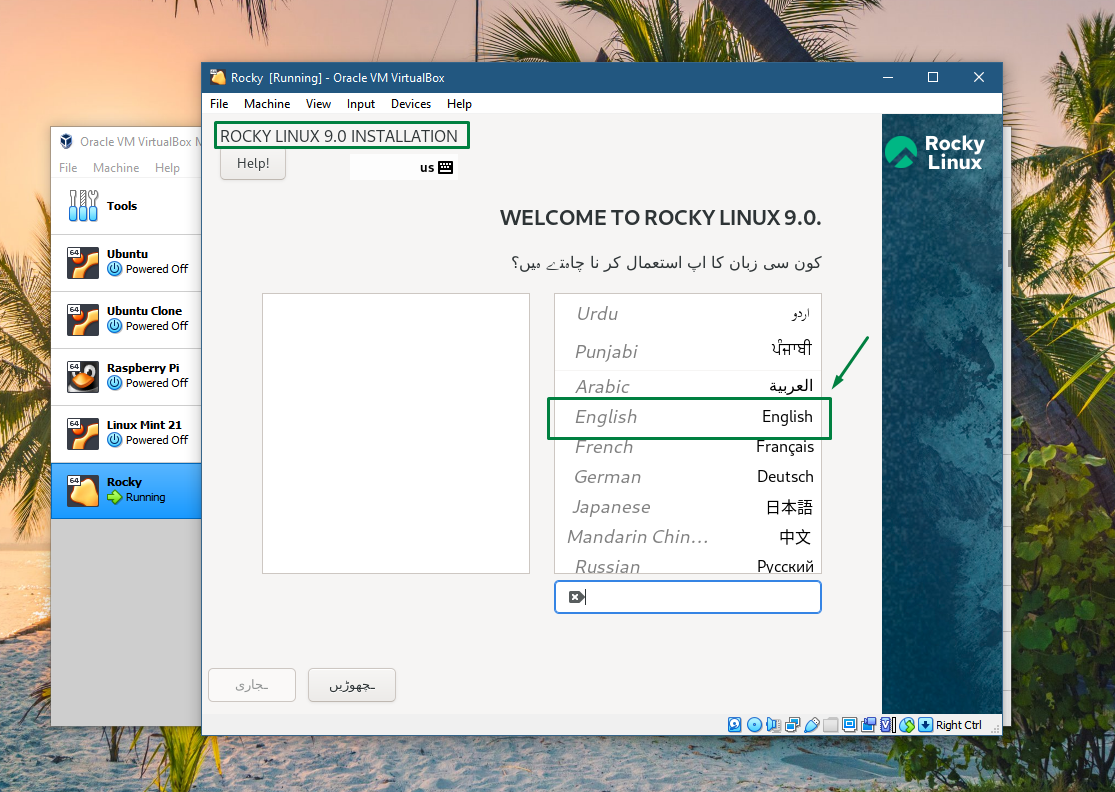
Once you have selected the language click on Continue:
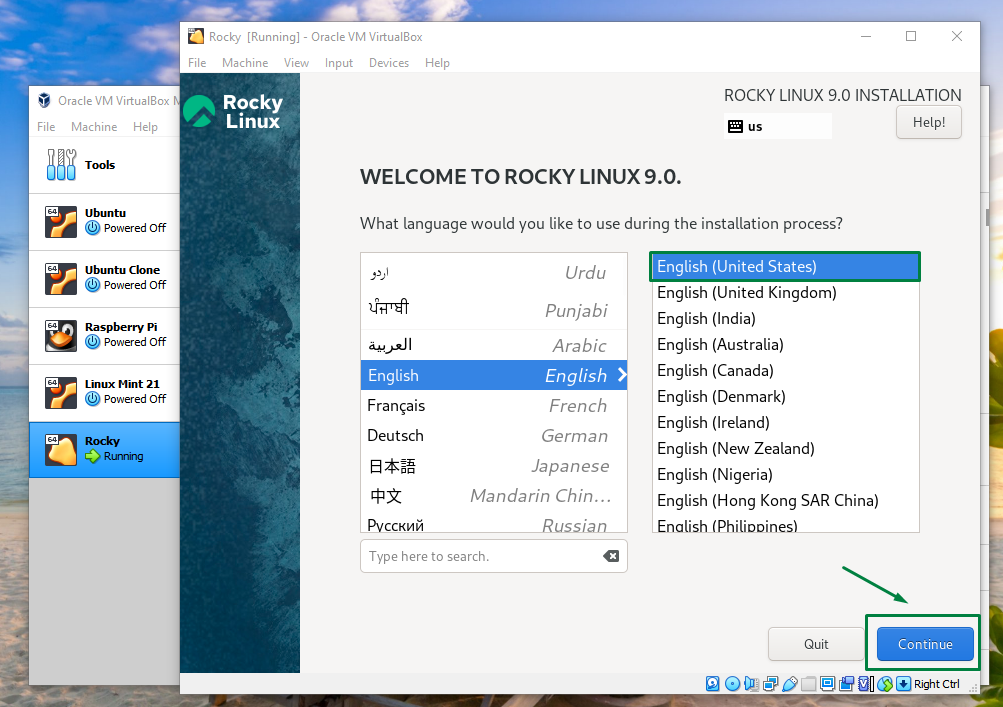
Step 16: Now complete the settings of the option that are highlighted one of which is the Installation Destination click on it:
Next select the hard drive and keep the Storage Configuration to Automatic after that click on Done:
Step 17: The next option that is highlighted is the Root Password, click on it:
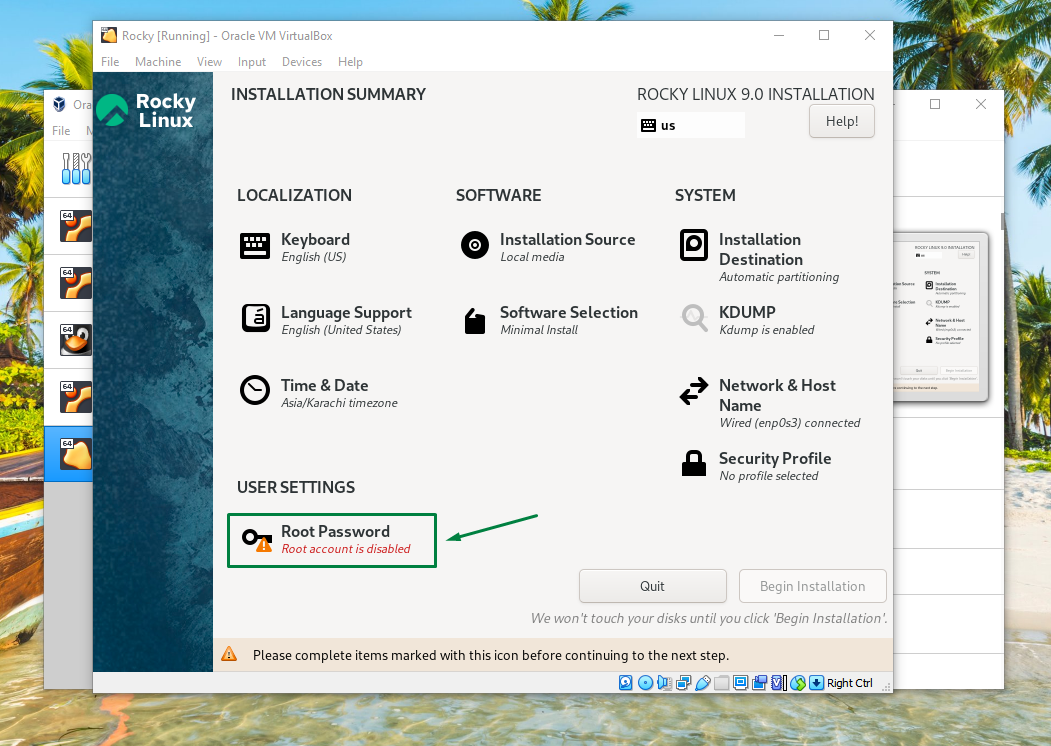
Set the Root Password and click on Done:
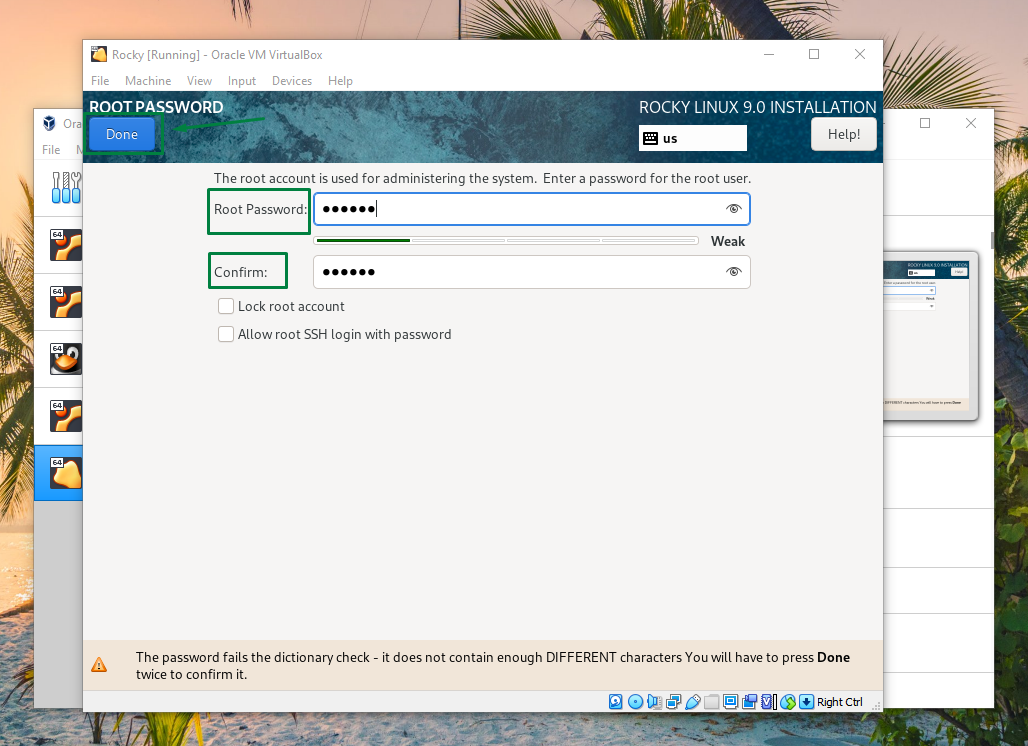
Step 18: Now click on Begin Installation:
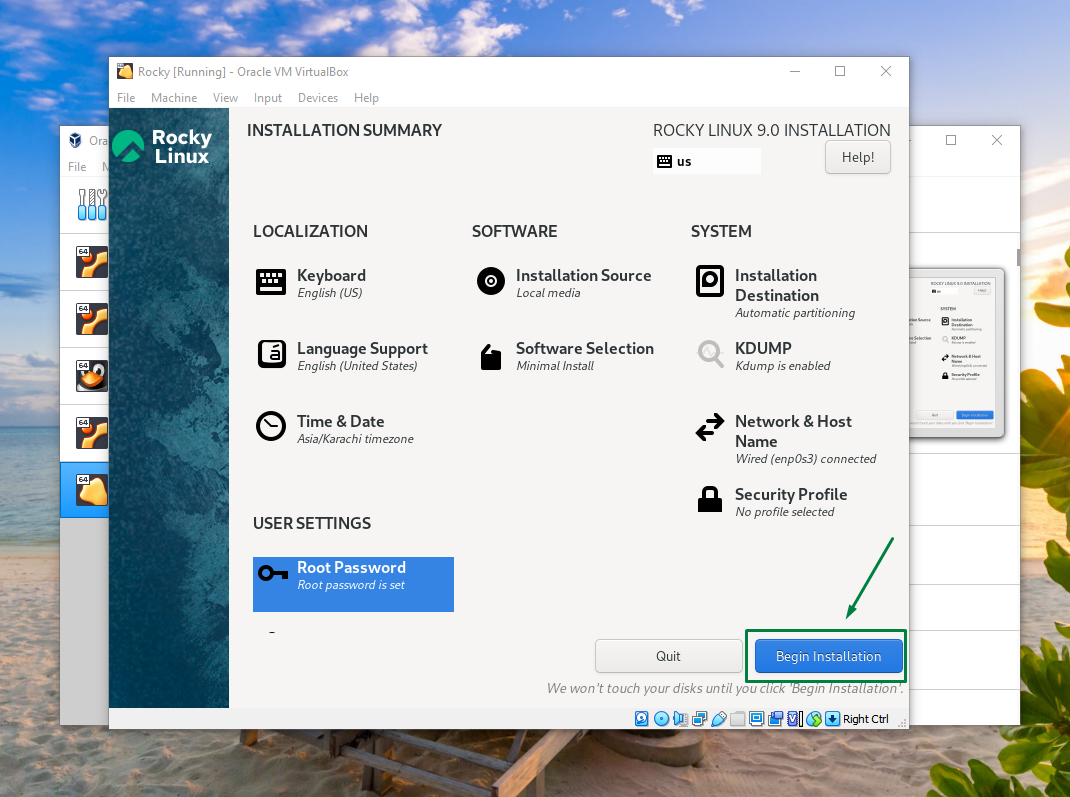
The installation process will start, it might take some time, so wait:
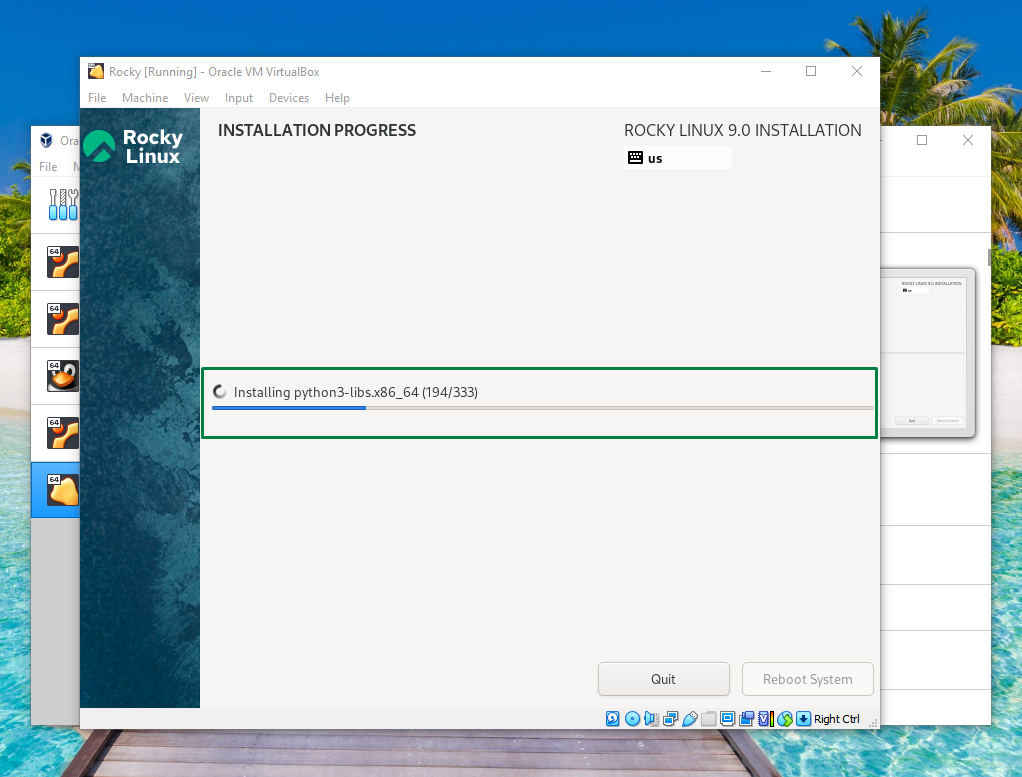
When the installation is complete click on Reboot System:
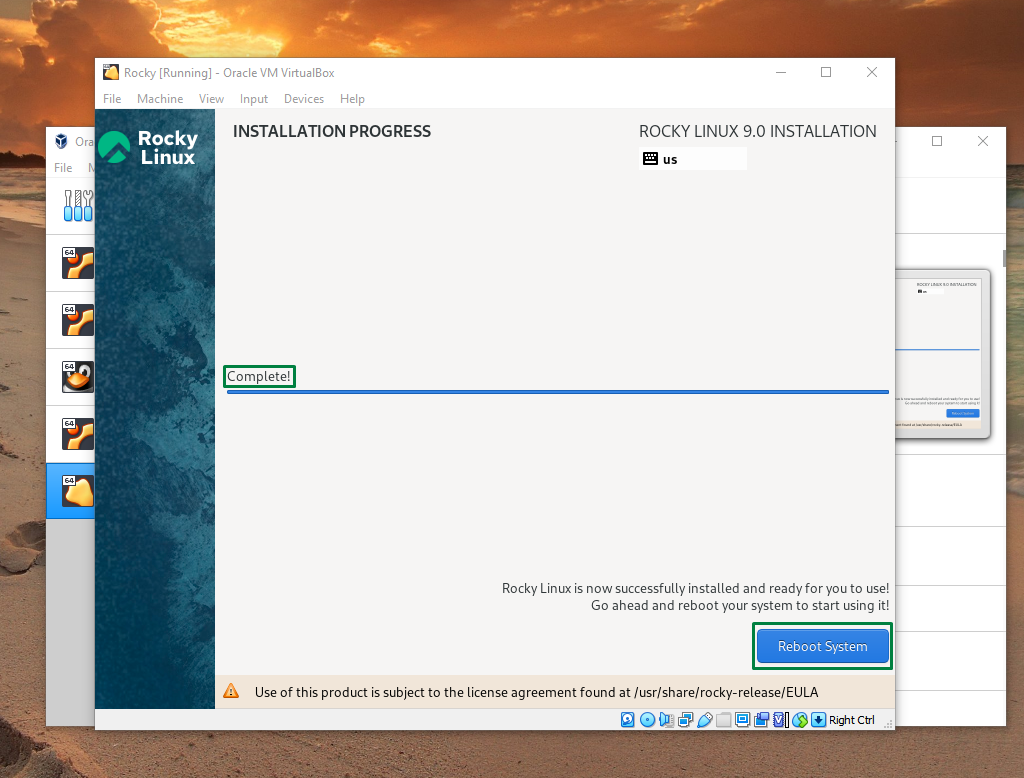
Step 19: Once the system is rebooted click on the Start setup:
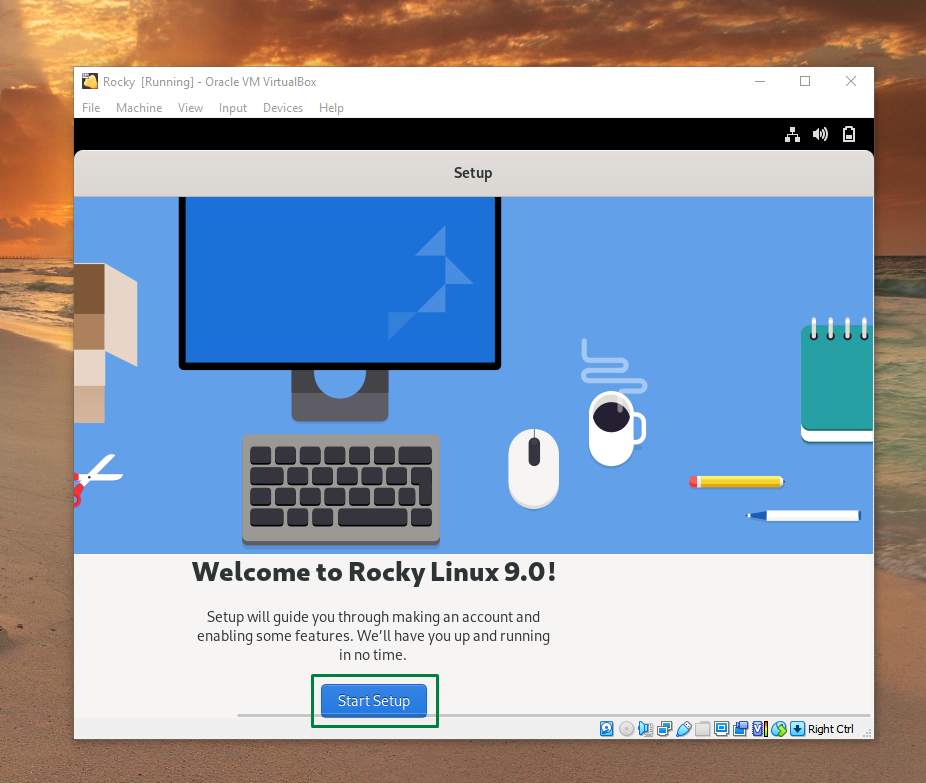
Step 20: Turn on the Location Services and click on Next to proceed further:
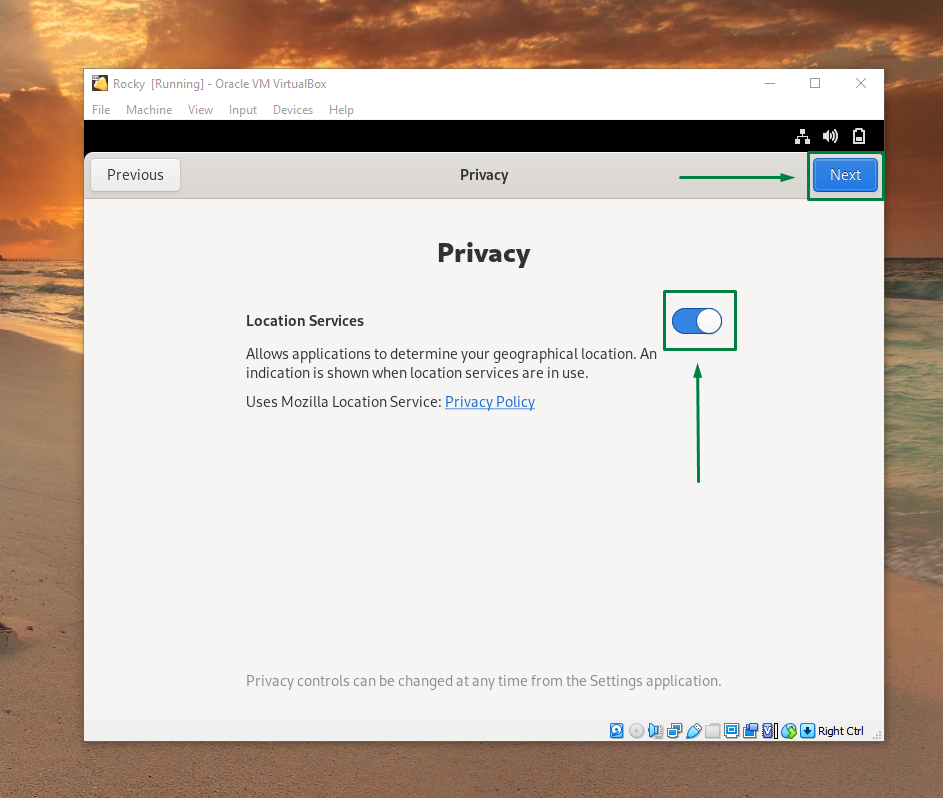
Step 21: Now add the any of your Online account or click on Skip:
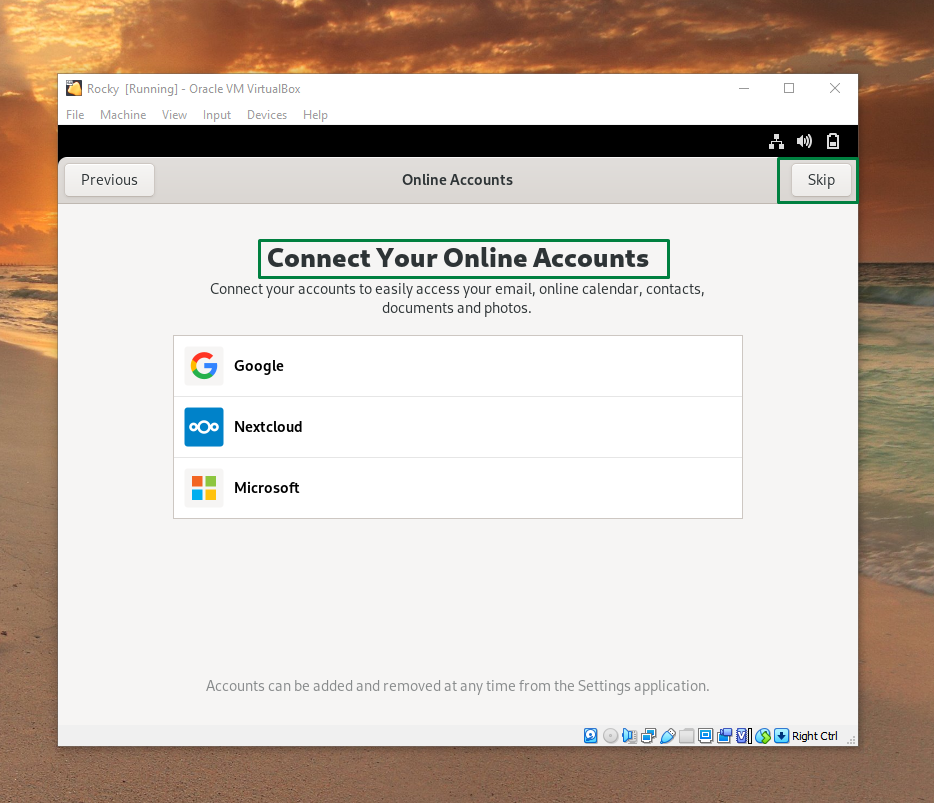
Step 22: Now set the Full Name and the Username and click on Next
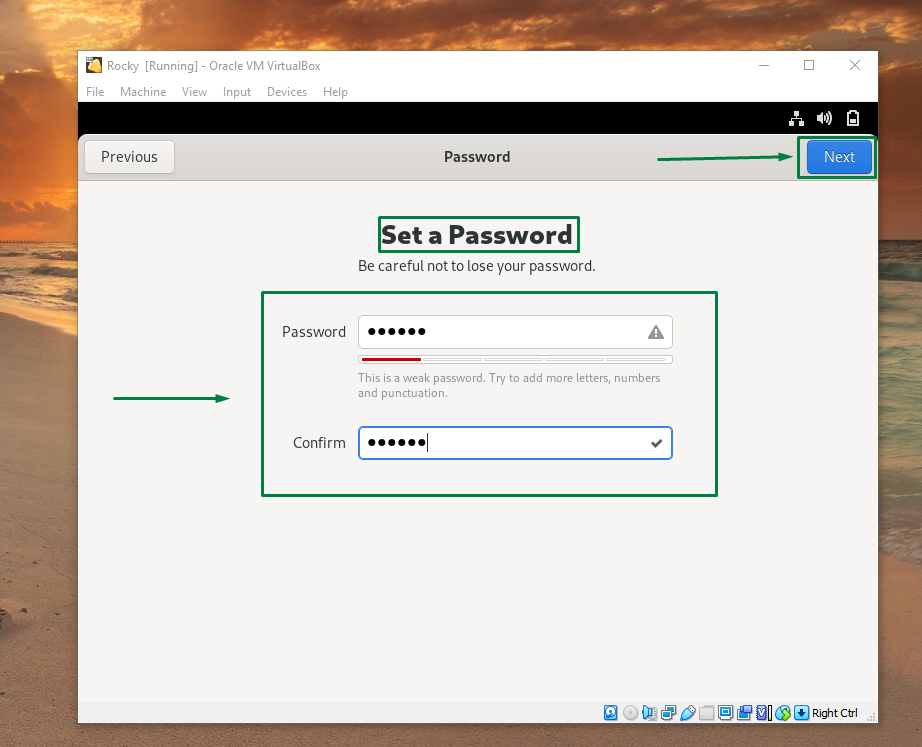
Step 23: Now Set a Password for your virtual machine and select Next:
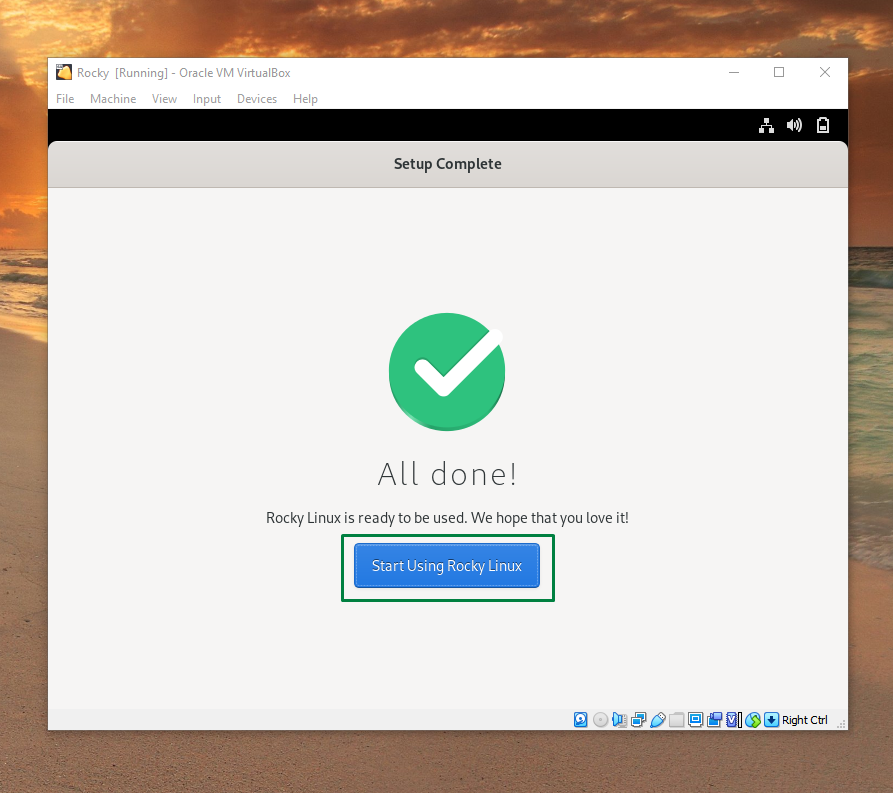
Now the setup is complete and then click on Start Using Rocky Linux: